The Neuroscience of Love: How Your Brain Reacts to Your Partner
14 August 2026
Love. A word so simple, yet so wildly complex. One moment, you're minding your business, sipping your coffee, and then boom—your heart skips a beat, your palms get clammy, and suddenly, you're obsessed with someone’s laugh, their scent, even the way they say your name. But have you ever wondered what’s actually happening inside your brain when you're head over heels in love?
Here’s where it gets juicy—your brain is the puppet master pulling every string behind those butterflies you feel. It’s not just romance novels or rom-coms stirring your emotions. Nope, it’s pure neuroscience, baby.
Let’s dive headfirst into the fascinating inner workings of your love-struck brain.
Love Isn’t Just in the Heart—It’s Wired in the Brain
We’ve all been told love comes from the heart. Sweet idea, sure. But scientifically speaking? The heart is just along for the ride. The real action happens in your brain. When you fall in love, your brain lights up like a Christmas tree. Think of it like a chemical cocktail being served up with a twist of passion.When you see your partner, a flurry of brain chemicals gets released—dopamine, oxytocin, serotonin, and even norepinephrine. Each of these has its own role, from sparking obsession to cementing long-term attachment.
Let’s break it down.
Dopamine: The High of Romantic Attraction
Dopamine is like your brain’s version of champagne—bubbly, intoxicating, and very addictive.This neurotransmitter is part of the brain’s reward system. When you interact with someone you're romantically drawn to, your brain rewards you with a surge of dopamine. It’s the same chemical triggered by cocaine, chocolate, or even a killer playlist. The result? Pleasure. Euphoria. A craving for more.
Ever felt like you’re addicted to your partner? Like you can’t stop thinking about them? That’s dopamine at work. Romantic love literally hijacks the reward system in your brain, amplifying feelings of excitement and desire.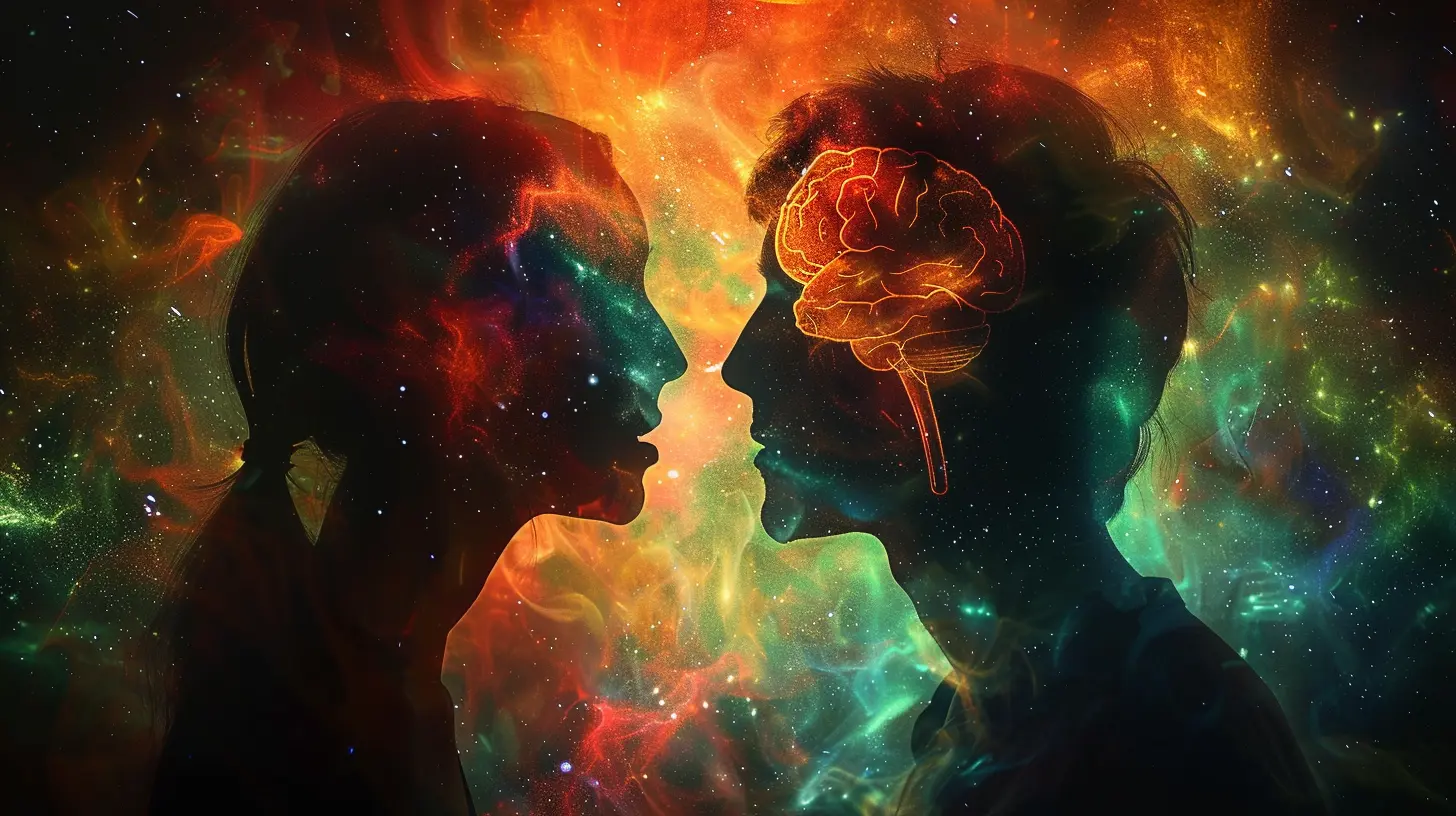
Oxytocin & Vasopressin: The "Cuddle Chemicals"
If dopamine fuels the fire, oxytocin and vasopressin build the foundation. Oxytocin, often nicknamed the “love hormone,” is released during physical touch—think hugging, kissing, and yes, sex.This hormone helps you bond. It’s what makes you feel connected to your partner—even in silence. Vasopressin, a close cousin of oxytocin, supports long-term commitment. These chemicals are all about attachment. They whisper in your brain, “Hey, this person feels safe. Let’s stick around.”
Ever noticed how your partner’s hug can calm your nerves better than anything else? That’s oxytocin giving your brain a warm, cozy blanket.
Norepinephrine: The Rush of New Love
Remember those early days of love? Your heart racing, sleep disappearing, appetite shrinking (except when they’re around)? That buzzing energy comes from norepinephrine—a stress hormone that also boosts alertness and focus.It’s the same hormone our body releases during a “fight or flight” response. That’s why falling in love kind of feels like you’re losing your mind. In a way, you are—at least temporarily.
When norepinephrine floods your system, you’re laser-focused on your partner, noticing every twitch, every tone, every teeny-tiny detail that makes them who they are.
Serotonin: Obsessive, Much?
This one’s tricky. While dopamine and norepinephrine are firing you up, serotonin levels actually drop—and that’s not necessarily a good thing.Low serotonin is linked to obsessive thinking. When you're newly in love, it’s common to think about your partner, oh, roughly 85% of the time. It's not just you going crazy; your brain is making it happen. The same phenomenon is observed in people with obsessive-compulsive disorder.
In some ways, love is a beautifully sanctioned form of madness.
The Brain in Long-Term Love: From Fireworks to Fireplace
Okay, so we've talked about the “fireworks” phase—the honeymoon period where everything is electric. But what happens months or years down the line? Does your brain get bored?Not exactly. It just changes gears.
In long-term relationships, the brain activates areas associated with deep attachment and pair bonding. While the dopamine-raging highs may cool off a bit, oxytocin and vasopressin take the wheel. Think less adrenaline and more comfort. Less "rollercoaster" and more "rocking chair."
You may not feel the same giddy rush every time your partner texts you at 2 a.m., but your brain is now wired to feel safe, satisfied, and secure in their presence. That’s love, too—just with a quieter roar.
Mirror Neurons: How You “Feel” Your Partner’s Emotions
Ever caught your partner's mood like a cold? If they come home stressed, suddenly you're carrying tension too?That’s thanks to something called mirror neurons—brain cells that allow us to empathize and literally "mirror" the emotions of the people we’re connected to. These neurons fire both when you perform an action and when you watch someone else do it.
It’s why you flinch when your partner stubs their toe or why you feel all fuzzy when they laugh. Your brain is syncing up with theirs. Like an emotional Wi-Fi connection.
The Brain on Heartbreak: Love’s Dark Side
No story about love is complete without touching on heartbreak. If love is a drug, breakups are the withdrawal. And your brain reacts accordingly.Functional MRI scans show that the brain areas activated during a breakup are the same ones triggered by physical pain. Your brain doesn’t know the difference. Emotional pain is, quite literally, pain.
And just like addiction withdrawal, you might experience cravings (wanting to text them), relapses (actually texting them), and days of emotional detox.
Neuroscience confirms what every broken heart has already felt—letting go of love can hurt like hell.
Your Brain Can Be Trained to Love Better
Here’s the kicker: your brain isn’t a fixed system. It’s plastic, meaning it can change. Yes, even how you love—or react to love—can be reshaped.Mindfulness, emotional intelligence, and good ol’ honest communication actually rewire your brain. Couples who practice gratitude, for instance, trigger more frequent dopamine hits. Even regular eye contact can increase oxytocin production.
So if your love life feels stuck or strained, there’s hope. You’re not doomed by biology. You can literally hack your brain to love smarter, deeper, better.
The Ultimate Mystery: Why Love Feels Like Magic
Despite all this scientific explanation—the dopamine rushes, the oxytocin cuddles, the serotonin dips—love still feels like magic. Even when we break it down to brain chemistry, there’s something beautifully elusive about why we fall for one person and not another.Why does one smile melt you? Why does one voice calm a storm inside you?
Maybe that’s the real magic. Love isn’t just chemistry—it’s alchemy. It’s biology and mystery holding hands in the dark.
So the next time your heart races when your partner walks into the room, remember: it’s not just your heart. It’s your brain whispering, “There they are again—the one who makes everything feel a little more electric.”
And that, my friend, is the neuroscience of love.
Final Thoughts: Your Brain, Your Heart, and That Crazy Little Thing Called Love
Love isn’t just poetry and pop songs—it’s neurons firing, chemicals mixing, pathways forming. It’s both chaos and control. But at the core, it's a deeply human experience that science is only just beginning to understand.Whether you’re in the honeymoon stage, years into marriage, or nursing a broken heart, your brain is your silent companion, shaping every sigh, every smile, every sting.
Isn’t that kind of beautiful?
So go ahead—love freely, love wildly, love with your whole brain.
all images in this post were generated using AI tools
Category:
Psychology Of LoveAuthor:

Christine Carter
Discussion
rate this article
1 comments
Starling McNeely
Ah yes, because nothing says love like a neurotransmitter party...
August 26, 2026 at 2:39 PM
Christine Carter
True, but those neurotransmitters sure know how to throw a good party.