How Cognitive Biases Will Shape Decision-Making in 2026
3 September 2026
The year 2026 will not be defined by smarter algorithms or more data. It will be defined by how humans react to those tools while carrying the same mental baggage we have carried for millennia. Cognitive biases, those systematic patterns of deviation from rational judgment, are not going away. But the environment in which they operate is shifting faster than at any point in history. Understanding this shift is not an academic exercise. It is a survival skill for executives, policymakers, healthcare providers, and anyone who makes consequential choices under uncertainty.
By 2026, three forces will collide: the maturation of generative AI as a decision-support tool, the fragmentation of trusted information sources, and a global economic environment marked by volatility. Each force amplifies certain biases while suppressing others. The result is a decision-making landscape that looks familiar on the surface but operates by different rules underneath.

The Automation Bias Paradox: Trusting Machines More, Understanding Them Less
Automation bias, the tendency to favor outputs from automated systems over contradictory non-automated information, will reach a critical inflection point in 2026. For the past decade, this bias has been a quiet problem in aviation and medicine. In the next two years, it becomes a mainstream issue because generative AI tools are now embedded in everyday workplace software. Spreadsheets suggest formulas. Email clients draft responses. Customer relationship management systems recommend next steps. Each of these features is a tiny automated decision aid, and humans are wired to accept their suggestions without deep scrutiny.The paradox is that as AI models become more fluent and confident in their outputs, the bias grows stronger. A 2026 professional will face a model that writes a strategic memo with perfect grammar, cites plausible-sounding sources, and presents a clear recommendation. The cognitive effort required to challenge that output is substantial. The path of least resistance is acceptance. This is not laziness. It is cognitive economy. The brain conserves energy by defaulting to trusted shortcuts, and a well-formatted AI response feels trustworthy precisely because it mimics the structure of expert human output.
The practical danger here is not that AI is always wrong. It is that automation bias leads to a specific failure mode: the inability to detect errors that fall outside the model's training distribution. In 2026, a financial analyst might rely on an AI tool to flag anomalies in quarterly reports. The tool was trained on historical data. A novel fraud scheme, designed to exploit a new regulatory loophole, will not look anomalous to the model. The analyst, trusting the clean bill of health, misses the red flag. The bias compounds the model's limitation.
What can a decision-maker do? The most effective countermeasure is not skepticism toward AI but structured verification. Before accepting any automated recommendation, ask one question: what would have to be true for this output to be wrong? This forces the brain out of passive acceptance mode and into active hypothesis testing. In 2026, organizations that institutionalize this question, making it a required step in workflow rather than an individual choice, will outperform those that do not.

The Availability Heuristic in an Era of Synthetic Media
The availability heuristic, judging the likelihood of an event by how easily examples come to mind, has always been distorted by media coverage. In 2026, the distortion becomes qualitatively different because the examples themselves can be synthetic. Video, audio, and images generated by AI are now indistinguishable from authentic recordings for most people. When a vivid, emotionally charged piece of media circulates online, the brain does not stop to verify its provenance. It immediately updates its risk assessment.Consider a supply chain manager in early 2026. She sees a viral video of a port congestion incident on the other side of the world. The video is realistic, but it is actually a deepfake created by a competitor to manipulate commodity prices. The manager's availability heuristic kicks in. She reroutes shipments, pays premium rates, and disrupts her own operations based on a fabricated event. The bias did not create the error. The synthetic media exploited the bias.
The deeper issue is that the availability heuristic relies on the assumption that remembered examples are real. That assumption is breaking down. By 2026, the information environment will contain a meaningful percentage of synthetic content that is never labeled as such. Decision-makers cannot simply "be more careful." The cognitive load of verifying every piece of media is unsustainable.
The practical response is to shift from verifying individual pieces of content to verifying sources at the network level. Instead of asking "is this video real?", ask "has this source been reliable in the past, and does this content fit their established pattern?" This is a slower, less satisfying process. It requires maintaining a mental map of information trustworthiness, which is itself subject to bias. The confirmation bias will push people toward sources that align with their existing views, making them more vulnerable to synthetic content that confirms those views. The best defense in 2026 is deliberate exposure to high-quality sources that frequently contradict one's assumptions. This is uncomfortable, but it builds a more accurate baseline for the availability heuristic to work from.

Confirmation Bias and the Customization Trap
Personalization algorithms have been shaping information diets for years. By 2026, these algorithms are more sophisticated, and they interact with confirmation bias in a way that creates an echo chamber that is nearly impossible to escape through willpower alone. The bias itself is simple: people seek information that confirms their existing beliefs and avoid information that challenges them. The algorithm takes this natural tendency and amplifies it to industrial scale.The 2026 version of this problem is not just political news. It is professional decision-making. A product manager researching a new feature will be served case studies, forum discussions, and expert opinions that all support the feature's viability. The algorithm learned from the manager's past clicks that she responds positively to success stories. It hides the failure analyses, the critical reviews, and the market data suggesting the feature is unnecessary. The manager makes a confident decision based on a distorted sample of the available evidence.
This is where the traditional advice to "seek out opposing viewpoints" fails. It assumes the person knows what their blind spots are. Confirmation bias is insidious because it operates outside conscious awareness. The manager does not realize she is only seeing supportive evidence. She believes she has done thorough research.
A more effective approach for 2026 involves changing the default structure of research. Instead of starting with a hypothesis and looking for support, start with a decision and look for the conditions under which that decision would be catastrophic. This is a pre-mortem technique borrowed from project management. It forces the brain to generate disconfirming evidence actively. In a personalized information environment, this technique is essential because the algorithm will not provide the disconfirming evidence unprompted. The decision-maker must generate it internally.
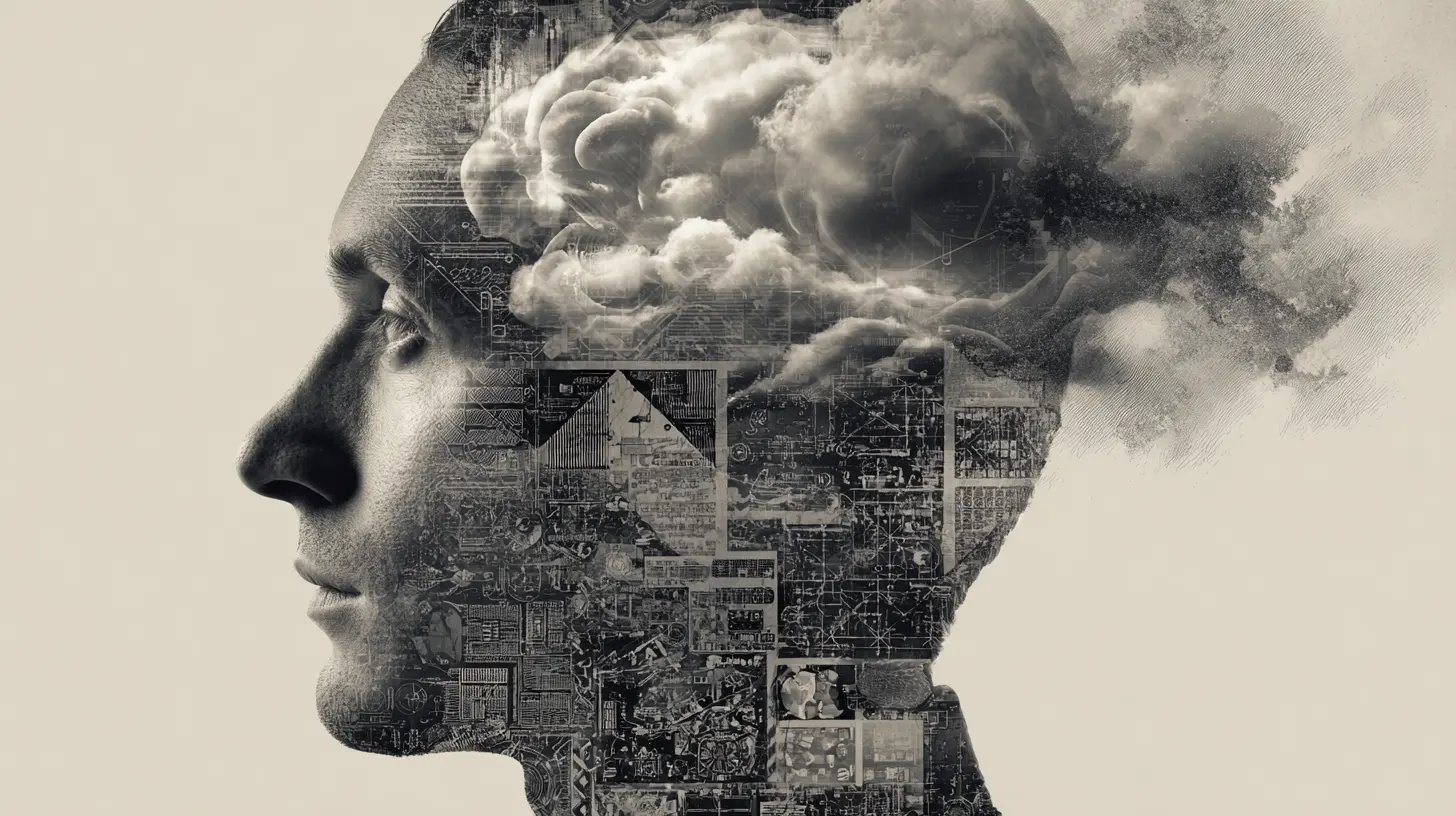
The Sunk Cost Fallacy Meets Agile Methodology
The sunk cost fallacy, continuing an endeavor because of previously invested resources, has a new arena in 2026: iterative product development. Agile methodologies encourage small, frequent releases and rapid pivots. In theory, this should reduce sunk cost bias because the investments are small. In practice, it creates a different trap. Teams become attached to the trajectory of their iterations. Each sprint builds on the last. The accumulated investment is not monetary but narrative. The team has a story about why their product is evolving in a certain direction, and abandoning that story feels like admitting failure.The 2026 twist is that AI-generated code and content make iteration faster and cheaper. This lowers the cost of trying new directions, which should logically reduce the sunk cost bias. But it does not, because the bias is not about actual costs. It is about identity and ego. A team that has spent six months refining a recommendation algorithm has a collective identity tied to that algorithm. Switching to a completely different approach, even if the data supports the switch, feels like a loss of self.
The most practical countermeasure is to separate the decision-maker from the decision history. In 2026, this means using AI to generate alternative approaches without attaching human ego to them. When a team evaluates whether to continue with their current approach, they should ask the AI to generate three completely different approaches that they have not tried. This is not because the AI alternatives are necessarily better. It is because seeing a competent alternative that was generated in seconds reduces the psychological weight of the existing investment. The sunk cost feels less significant when the alternative is visibly cheap to produce.
The Overconfidence Effect in Predictive Markets
Overconfidence, the tendency to overestimate the accuracy of one's judgments, will be particularly dangerous in 2026 because predictive tools are becoming more accessible and more convincing. Executives will have dashboards that show probability estimates for market movements, customer behavior, and competitor actions. These dashboards look scientific. They present numbers with decimal points and confidence intervals. The human brain interprets this precision as accuracy.The reality is that these predictive models are only as good as their assumptions, and those assumptions are often hidden. In 2026, a model might predict a 73 percent chance of a specific regulatory change. The executive sees this number and feels informed. What the executive does not see is that the model was trained on data from a period of regulatory stability, and the current political environment is highly volatile. The 73 percent figure is precise but not accurate. The overconfidence bias causes the executive to treat the number as a fact rather than a guess.
The antidote is not to reject quantitative predictions. It is to force a translation step. Before acting on any probability, ask: what would change this probability by 20 percentage points? If the decision-maker cannot identify at least three plausible events that would dramatically shift the prediction, then the prediction is probably overfit to historical patterns. In 2026, the most valuable skill is not interpreting model outputs. It is identifying the model's blind spots, which requires understanding what data the model did not see.
The Bandwagon Effect in Organizational Decision-Making
The bandwagon effect, adopting beliefs because many others have adopted them, is amplified in 2026 by real-time collaboration tools and social proof metrics. When a decision is made in a meeting and the collaboration software shows that 80 percent of team members have reacted positively, the remaining 20 percent face enormous social pressure to conform. This is not new. What is new is the speed and visibility of consensus formation.In a remote or hybrid workplace, decisions often happen asynchronously. The first few reactions to a proposal set the tone. If the first three people to respond are enthusiastic, the algorithmically sorted feed shows this enthusiasm to everyone else. Late responders, who might have valuable objections, are more likely to suppress them because the bandwagon is already rolling. The result is a false consensus that feels more robust than it is.
The best practice for 2026 is to deliberately slow down consensus formation. This feels counterintuitive in a fast-paced business environment, but it prevents costly groupthink. When presenting a major decision, require that all feedback be submitted anonymously before any discussion occurs. This prevents the anchoring effect of early vocal opinions. It also reduces the social cost of dissent. The bandwagon effect cannot operate if the wagon does not start rolling until everyone has had a chance to speak.
The Framing Effect and the Presentation of AI Outputs
The framing effect, where the way information is presented changes the decision, will be a subtle but pervasive force in 2026 because AI systems control the presentation. A model can frame the same data as a 90 percent success rate or a 10 percent failure rate. The underlying facts are identical. The decision-maker's response will differ dramatically.This is not a problem with the AI. It is a problem with the human cognitive system, and it is exploitable. In 2026, organizations will need to standardize how AI outputs are framed to avoid accidental manipulation. For example, if a risk assessment tool always presents outcomes in terms of survival rates rather than mortality rates, the organization will systematically underestimate risk. If it always presents in terms of potential losses rather than potential gains, the organization will become excessively risk-averse.
The solution is not to eliminate framing, which is impossible. It is to require that AI outputs present multiple frames side by side. A decision-support tool should show both the gain frame and the loss frame. This forces the decision-maker to recognize that the underlying reality is the same, and the difference is purely presentational. This awareness does not eliminate the framing effect, but it reduces its power. In 2026, the most sophisticated organizations will treat framing as a variable to be controlled, not a nuisance to be ignored.
The Planning Fallacy in Long-Horizon Projects
The planning fallacy, underestimating the time and cost required to complete a project, is well documented. In 2026, it will be exacerbated by the speed of AI-assisted work. When a team can generate a draft plan in minutes using AI, they feel that execution will be equally fast. This is a category error. Generating a plan is not the same as executing it. The plan generation is fast because it is a cognitive task. The execution is slow because it involves real-world constraints, coordination with other humans, and unforeseen obstacles.A 2026 project manager might use AI to create a detailed timeline for launching a new product. The AI produces a schedule that looks comprehensive. The manager, influenced by the planning fallacy, accepts the schedule without adjusting for the fact that the AI has no experience with this specific team, this specific vendor, or this specific regulatory environment. The AI is not overconfident. It has no confidence. It simply generates a statistically average timeline. The human, reading the output, imbues it with false certainty.
The practical fix is to apply a multiplier to AI-generated timelines, but this is too crude. A better approach is to ask the AI for a range of outcomes, specifically the 10th percentile and 90th percentile completion times. Then, plan for the 90th percentile. This is not pessimism. It is calibration. The planning fallacy thrives on single-point estimates. By forcing a range, the decision-maker is reminded that uncertainty exists.
The Status Quo Bias in Adopting New Decision Tools
The status quo bias, preferring things to stay the same, will paradoxically be strongest among the people most excited about new technology. In 2026, a company might adopt a cutting-edge decision-support system but continue to make decisions in the same hierarchical structure as before. The tool is new. The process is old. The status quo bias operates not on the surface level of tools but on the deeper level of power dynamics and workflow.This is a common mistake. Organizations believe that adopting AI is a technological change when it is actually a behavioral change. The AI will only improve decisions if the humans using it are willing to change how they ask questions, how they weigh evidence, and how they handle disagreement. If the CEO still expects final say on every major decision, the AI becomes a justification tool rather than a decision aid. The status quo bias ensures that the AI is used to confirm existing power structures rather than challenge them.
The most successful organizations in 2026 will be those that treat AI adoption as an opportunity to redesign decision processes from scratch. This is painful because it threatens established roles. But the alternative is worse. Using a powerful new tool in an old process does not improve decisions. It merely makes the old process faster, which amplifies the existing biases.
A Practical Framework for Bias-Resistant Decision-Making in 2026
Given these forces, what should an individual decision-maker actually do? The first step is to accept that biases cannot be eliminated. Anyone who claims to be objective is deluding themselves. The goal is not purity. It is error reduction.The second step is to build bias checks into the workflow rather than relying on willpower. Before making any significant decision, run it through a simple checklist. First, ask what evidence would change your mind. If you cannot answer this, you are not making a decision. You are making a commitment. Second, ask who benefits from you making this decision in this particular way. This surfaces conflicts of interest, including the subtle ones created by algorithmic curation. Third, ask what the opposite decision would look like and whether it is truly worse. This counteracts the status quo bias and the sunk cost fallacy.
The third step is to diversify decision inputs deliberately. In 2026, this means more than reading opposing viewpoints. It means seeking out people with different cognitive styles. A highly analytical person should consult someone who is intuitive. A fast decision-maker should consult someone who is methodical. This is uncomfortable because cognitive diversity creates friction. But friction slows down decision-making, and slowing down is precisely what is needed to counteract the speed of automated systems.
The Role of Emotional Regulation
Cognitive biases are not purely logical errors. They are intertwined with emotion. Fear amplifies the availability heuristic. Hope amplifies overconfidence. Attachment amplifies the sunk cost fallacy. In 2026, the pace of change will generate more emotional activation, which will in turn strengthen biases.The most underrated skill for decision-making in 2026 is emotional regulation. This does not mean suppressing emotions. It means recognizing when an emotional state is driving a decision and pausing until the emotional intensity decreases. A simple technique is to make no significant decisions within 24 hours of receiving surprising news, whether good or bad. The surprise itself, regardless of valence, triggers cognitive distortions. Waiting a day allows the initial emotional response to subside and more balanced reasoning to emerge.
This is difficult in a culture that rewards speed and decisiveness. But the cost of a bad decision is almost always higher than the cost of a delayed decision. In 2026, the organizations that build delay into their decision processes will make better choices than those that pride themselves on rapid execution.
The Future Is Not Rational
The year 2026 will not see the triumph of rationality. It will see the continued evolution of human cognition in a world that is increasingly designed by machines. The biases that have served humans for thousands of years, helping them make quick judgments in uncertain environments, are now being exploited by systems that do not share human values or limitations.This is not a cause for despair. It is a cause for humility. The decision-maker who acknowledges their own cognitive vulnerabilities is better positioned than the one who believes they are immune. The tools of 2026 will amplify whatever cognitive tendencies the user brings to them. If the user brings curiosity, skepticism, and emotional awareness, the tools will produce better outcomes. If the user brings arrogance, haste, and confirmation seeking, the tools will produce faster versions of the same mistakes.
The most important shift for 2026 is not technological. It is attitudinal. Decision-makers must move from a mindset of certainty to a mindset of inquiry. They must treat every decision as a hypothesis to be tested rather than a conclusion to be defended. This is not a natural human tendency. It requires deliberate practice. But it is the only approach that can keep pace with the complexity of the coming year.
The biases will be there. The question is whether the decision-makers will be aware enough to work around them. Those who are will find that 2026 is a year of opportunity. Those who are not will find that the same biases, amplified by powerful tools, lead them into predictable and avoidable errors. The difference is not intelligence. It is awareness.
all images in this post were generated using AI tools
Category:
Cognitive BiasesAuthor:

Christine Carter
Discussion
rate this article
2 comments
Mackenzie Jacobs
Challenge your biases to unlock clearer decision-making in 2026!
September 10, 2026 at 3:39 AM
Christine Carter
Absolutely! Challenging our biases is key to making better decisions and navigating the complexities ahead.
Hadley Bell
This article highlights the crucial role cognitive biases will play in our decision-making processes in 2026. Understanding these biases can help us make better choices, whether in our personal lives or in business. Awareness is the first step to improving our judgment.
September 5, 2026 at 3:04 AM