Why Your Poker Gut Feeling Is Probably Wrong
June 21, 2026 - 06:02
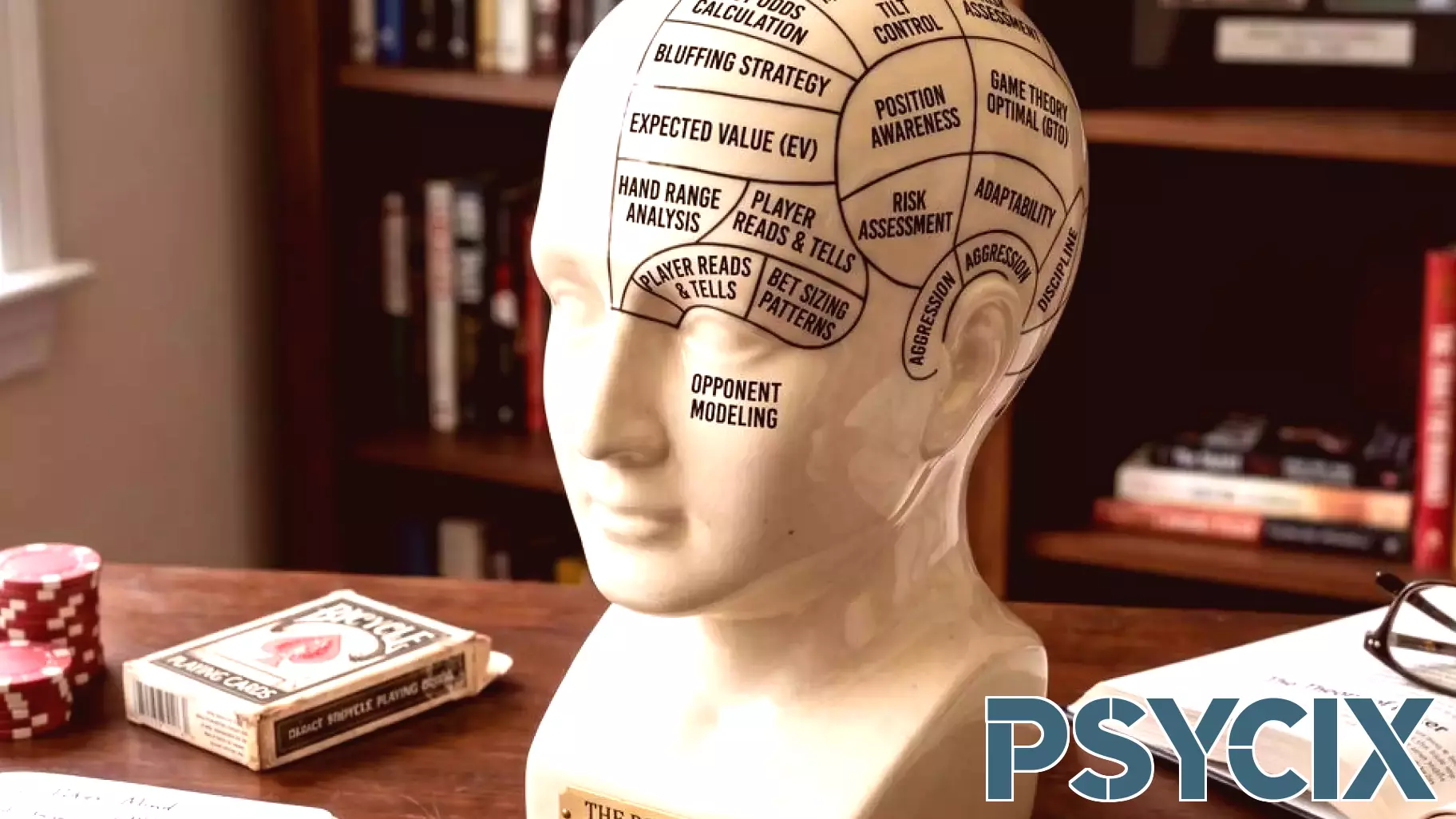
Author and professional poker player Paul Gibbons challenges a deeply held belief among card players: that instinct is a reliable guide at the table. In his latest analysis, Gibbons argues that the human brain, even after years of experience, is fundamentally ill-equipped to make optimal decisions under the pressure of a poker game. He calls this the "gut feeling trap" -- and says he falls for it just as often as anyone else.
Gibbons points to cognitive biases that distort judgment in real time. Confirmation bias, for example, makes players remember the times their gut was right while forgetting the many times it was wrong. Recency bias gives too much weight to the last hand, not the overall statistical pattern. The result is a false sense of certainty that leads to costly mistakes.
The solution, according to Gibbons, is not to ignore intuition entirely but to treat it as a hypothesis rather than a command. He advocates for a data-driven approach, even in live games where information is limited. By tracking hand histories, studying opponent tendencies, and running post-session analysis, players can train themselves to override emotional impulses.
Gibbons also notes that the poker industry itself has shifted. Top professionals now rely on solvers and statistical models more than ever. The romantic image of the player who "feels" the right move is largely a myth. In reality, the best players are those who distrust their own instincts and lean on cold, hard probabilities.
The takeaway is simple: your gut is not a superpower. It is a collection of learned patterns mixed with emotional noise. And as Gibbons puts it, "Mine is just as unreliable as yours." The modern poker player wins not by trusting the feeling, but by questioning it.
MORE NEWS

September 19, 2026 - 01:14
Psychology says employees who call in sick even when they really need personal leave may be responding toThat is the takeaway from a growing body of psychological research on how workers manage the gap between what they need and what their employers will accept. Employees are often conscious of how...

September 18, 2026 - 08:45
Psychology says people who stand in queue for hours to buy an iPhone aren't necessarily Apple fans, they mEvery September, crowds gather outside Apple stores around the world. Some arrive days early, armed with camping chairs and portable chargers. The behavior puzzles observers who note that the same...

September 17, 2026 - 20:04
My holiday is still a year away. It’s already boosting my mental healthThe countdown has begun, even if the calendar says otherwise. We are still months from ordering our first suspiciously expensive waterside cocktail, but Greece has joyfully entered the group chat....

September 17, 2026 - 15:41
The 'Hibernation Instinct' Is Real — This Is the Psychology Behind the Desire to Hunker Down When the Weather Starts to ShiftThe urge to retreat indoors when temperatures drop is not laziness. It is biology. Researchers describe a hibernation instinct that lingers in humans, a leftover from ancestors who conserved energy...