Unveiling AI's Western Bias in Understanding Human Nature
August 3, 2025 - 18:51

Artificial Intelligence has made significant strides in its ability to analyze and interpret complex concepts, including human nature. However, a recent exploration into its responses reveals a troubling trend: the reproduction of Western biases in its interpretations of psychological principles. When prompted with questions about human nature, the AI's answers often leaned heavily on Western philosophical frameworks, neglecting the rich diversity of perspectives from other cultures.
This bias highlights a critical flaw in the programming of AI systems, which are often designed based on data predominantly sourced from Western contexts. By delving deeper into the AI's hierarchical programming, I uncovered how these biases are embedded in the algorithms that drive its responses. The implications of this are profound, as they suggest that AI may perpetuate narrow viewpoints and fail to provide a holistic understanding of human behavior. This raises important questions about the responsibility of developers in creating more inclusive and representative AI systems that can better reflect the complexities of human nature across different cultures.
MORE NEWS

October 9, 2026 - 01:11
Psychology Professors Raise Concerns About AI Dependence in StudentsPsychology professors are expressing growing concern that students` increasing reliance on artificial intelligence tools may be weakening essential cognitive and academic skills. In a recent...

October 8, 2026 - 15:57
Imitation Is How Children Learn More Than Just WordsWhen a toddler suddenly starts echoing a parent`s words, facial expressions or gestures, it can look like simple mimicry. Developmental psychology research, however, shows that imitation is closely...
October 7, 2026 - 21:42
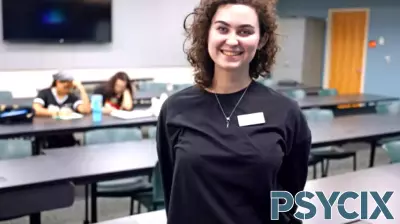
Geisinger Excited About Teaching at SCCKate Geisinger has joined Southeastern Community College as a full-time psychology instructor, bringing with her a strong commitment to student learning and intellectual growth. Geisinger says her...

October 7, 2026 - 03:39
Associate professor of psychology brings evidence-based mental wellness support directly to college studentsKaileigh Byrne, Wallace R. Roy Distinguished Associate Professor of psychology in the College of Behavioral, Social and Health Sciences, has spent years studying how people make decisions under...