Wellness stacking: why psychologists say it beats willpower for building healthy habits
August 23, 2026 - 22:30

For years, the standard advice for building healthy habits was simple: just try harder. But psychologists are now pointing to a different approach called wellness stacking, and they say it works far better than relying on willpower alone. The idea is not to start a new habit from scratch every day, but to attach it to something you already do without thinking. For example, after you brush your teeth, you do ten squats. After you pour your morning coffee, you take three deep breaths. You stack the new behavior onto an existing anchor.
The reason this works, experts say, is neurological. Your brain already has strong neural pathways for routines like making breakfast or commuting. When you piggyback a new action onto one of those pathways, you are not asking your brain to create a whole new route. You are just adding a small detour to a road it already travels daily. This lowers the mental effort required, which is exactly where willpower fails. Willpower is a limited resource that gets drained by stress, fatigue, and decision-making. By the end of a long day, most people simply do not have enough left to force themselves to exercise or meditate.
Wellness stacking also helps on bad days. When you are tired, anxious, or overwhelmed, you do not have to think about what to do next. The anchor triggers the action automatically. That removes the need for motivation, which is often unreliable. A psychologist might tell you to start with just one stack, keep it tiny, and only add a second stack after the first feels automatic. Over time, you can build a whole chain of small, healthy actions that require almost no conscious effort. The key is to be consistent, not perfect. Missing one day is fine, but the stack should stay simple enough that you can do it even when you feel terrible. In that way, wellness stacking turns habit building from a battle of will into a quiet, reliable system.
MORE NEWS

October 9, 2026 - 01:11
Psychology Professors Raise Concerns About AI Dependence in StudentsPsychology professors are expressing growing concern that students` increasing reliance on artificial intelligence tools may be weakening essential cognitive and academic skills. In a recent...

October 8, 2026 - 15:57
Imitation Is How Children Learn More Than Just WordsWhen a toddler suddenly starts echoing a parent`s words, facial expressions or gestures, it can look like simple mimicry. Developmental psychology research, however, shows that imitation is closely...
October 7, 2026 - 21:42
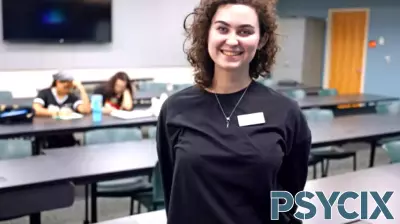
Geisinger Excited About Teaching at SCCKate Geisinger has joined Southeastern Community College as a full-time psychology instructor, bringing with her a strong commitment to student learning and intellectual growth. Geisinger says her...

October 7, 2026 - 03:39
Associate professor of psychology brings evidence-based mental wellness support directly to college studentsKaileigh Byrne, Wallace R. Roy Distinguished Associate Professor of psychology in the College of Behavioral, Social and Health Sciences, has spent years studying how people make decisions under...