Understanding High Sensitivity: An Innate Trait, Not a Trauma Response
February 28, 2025 - 13:44

Recent research has shed light on the nature of high sensitivity, suggesting that it is primarily an innate characteristic rather than a direct result of traumatic experiences. This revelation challenges the common misconception that individuals with high sensitivity are merely responding to past traumas.
High sensitivity is often marked by heightened emotional responses, deep empathy, and a strong awareness of environmental stimuli. While it is true that those with high sensitivity may experience the effects of difficult life events more intensely, the underlying trait itself is not a byproduct of such experiences. Instead, it appears to be a fundamental aspect of personality that can influence how individuals perceive and interact with the world around them.
This understanding can shift the narrative for many who identify as highly sensitive, allowing them to embrace their trait as a natural part of who they are, rather than viewing it through the lens of trauma. As society becomes more aware of the nuances of sensitivity, it is essential to foster an environment that appreciates and supports the diverse ways in which people experience life.
MORE NEWS

October 9, 2026 - 01:11
Psychology Professors Raise Concerns About AI Dependence in StudentsPsychology professors are expressing growing concern that students` increasing reliance on artificial intelligence tools may be weakening essential cognitive and academic skills. In a recent...

October 8, 2026 - 15:57
Imitation Is How Children Learn More Than Just WordsWhen a toddler suddenly starts echoing a parent`s words, facial expressions or gestures, it can look like simple mimicry. Developmental psychology research, however, shows that imitation is closely...
October 7, 2026 - 21:42
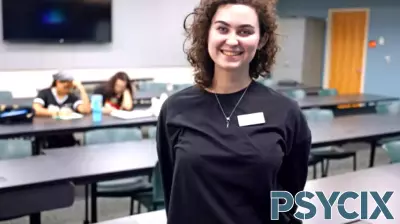
Geisinger Excited About Teaching at SCCKate Geisinger has joined Southeastern Community College as a full-time psychology instructor, bringing with her a strong commitment to student learning and intellectual growth. Geisinger says her...

October 7, 2026 - 03:39
Associate professor of psychology brings evidence-based mental wellness support directly to college studentsKaileigh Byrne, Wallace R. Roy Distinguished Associate Professor of psychology in the College of Behavioral, Social and Health Sciences, has spent years studying how people make decisions under...