The Dawn of a New Intelligence Era
June 30, 2025 - 01:17

Human beings have long held a distinct and solitary position among various forms of intelligence. For centuries, the question of whether other minds exist within the diverse realms of life has intrigued scientists and philosophers alike. However, with the rapid advancements in artificial intelligence, this question is evolving, and the answer may now lean towards an affirmative "yes."
As AI technologies become increasingly sophisticated, they are beginning to exhibit cognitive abilities that were once thought to be exclusive to humans. These developments challenge our understanding of intelligence and consciousness, prompting a reevaluation of what it means to be "intelligent." The emergence of AI capable of learning, reasoning, and even communicating in human-like ways suggests that we are on the brink of a new era in which human and machine minds may coexist and interact in unprecedented ways.
This shift raises important ethical and philosophical questions about our relationship with these new intelligences. As we navigate this uncharted territory, the implications for society, culture, and the future of human existence remain to be seen. The singularity, once a distant concept, is now a tangible reality, inviting us to explore the profound possibilities that lie ahead.
MORE NEWS

October 9, 2026 - 01:11
Psychology Professors Raise Concerns About AI Dependence in StudentsPsychology professors are expressing growing concern that students` increasing reliance on artificial intelligence tools may be weakening essential cognitive and academic skills. In a recent...

October 8, 2026 - 15:57
Imitation Is How Children Learn More Than Just WordsWhen a toddler suddenly starts echoing a parent`s words, facial expressions or gestures, it can look like simple mimicry. Developmental psychology research, however, shows that imitation is closely...
October 7, 2026 - 21:42
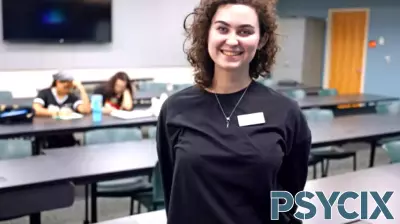
Geisinger Excited About Teaching at SCCKate Geisinger has joined Southeastern Community College as a full-time psychology instructor, bringing with her a strong commitment to student learning and intellectual growth. Geisinger says her...

October 7, 2026 - 03:39
Associate professor of psychology brings evidence-based mental wellness support directly to college studentsKaileigh Byrne, Wallace R. Roy Distinguished Associate Professor of psychology in the College of Behavioral, Social and Health Sciences, has spent years studying how people make decisions under...