Rationality, Psychology and Capitalism
July 4, 2026 - 06:14
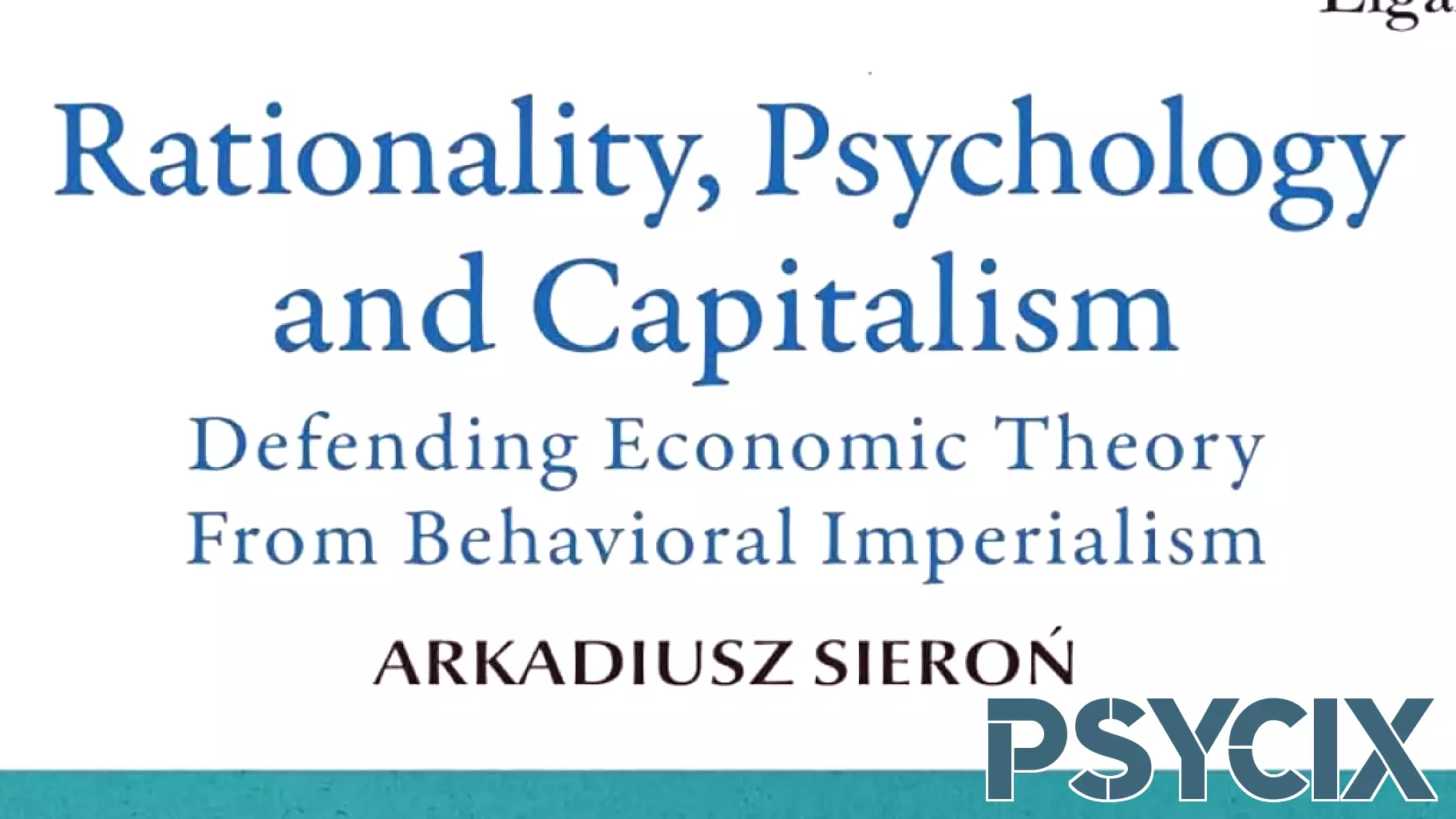
A fresh critique of behavioral economics has arrived, arguing that the field's popular criticisms of rational choice theory are not just misguided but dangerously overreaching. The book, "Rationality, Psychology and Capitalism: Defending Economic Theory From Behavioral Imperialism," by former Mises Summer Fellow Arkadiusz Sieron, makes a case for why traditional economic models still hold water.
Sieron pushes back against what he sees as an intellectual power grab. For decades, behavioral economists like Daniel Kahneman and Richard Thaler have pointed out that real humans are not the perfectly rational, calculating agents found in classical textbooks. They show that people procrastinate, overvalue what they already own, and make decisions based on emotion rather than logic. This research has won Nobel prizes and reshaped public policy, from retirement savings plans to "nudge" units in governments around the world.
But Sieron argues that the critics have gone too far. He contends that many of the supposed "irrationalities" identified in lab experiments disappear when you look at how people actually behave in real markets, where they have incentives to learn from their mistakes. The book defends the core idea that human action is purposeful, even when it looks messy from the outside. It also warns that using behavioral psychology to justify more government intervention ignores the wisdom embedded in market prices and voluntary exchange.
The work is not a blanket rejection of psychology. Instead, it tries to draw a clear line between useful insights from behavioral science and the "imperialism" of trying to replace the entire framework of economics. For readers tired of being told they are predictably irrational, Sieron offers a defense of the rational actor model and the capitalist system it helps explain.
MORE NEWS

October 2, 2026 - 12:39
Psychology organisations apologise for harm caused to MāoriAt an event in Wellington today, professional psychology organisations issued a formal apology to Maori for the harm caused by racism within the field of psychology. The apology, delivered during a...

October 1, 2026 - 20:17
Source Matters: Comparing Employee Reactions to Human, AI, and Hybrid Performance Feedback | Frontiers in PsychologyA new study compares anticipated reactions to identical performance feedback described as manager-written, AI-generated, or a combination of both, raising questions about how managers use AI in...

October 1, 2026 - 02:47
Why Sleeping Through Problems Does Not Solve ThemAfter an argument, someone may choose to sleep for a while and calm down. Another person may head to bed simply to escape a difficult conversation. There is an important difference between the two....

September 30, 2026 - 09:48
Why People Cling to Conspiracy Theories After Shocking EventsWhen dramatic events dominate the news cycle, a predictable pattern follows. Within hours of major incidents, claims emerge that the event was staged, faked, or orchestrated by hidden forces. These...