Navigating the Balance Between AI Dependence and Autonomy
March 15, 2025 - 23:41

As artificial intelligence continues to evolve at a rapid pace, society faces a critical challenge: how to balance our increasing reliance on these technologies with the need for human autonomy. The integration of AI into various aspects of daily life—from personal assistants to complex decision-making systems—has the potential to enhance efficiency and convenience. However, this reliance raises concerns about the diminishing role of human agency.
Experts warn that without careful consideration, we may find ourselves trapped in a cycle of dependence, where stepping back from AI becomes not a choice but a precarious fall into a landscape dominated by automated systems. This "AI oscillation trap" highlights the necessity for resilience in our technological interactions. To maintain a healthy relationship with AI, individuals and organizations must prioritize critical thinking and decision-making skills, ensuring that technology serves as a tool rather than a crutch.
As we forge ahead, it is imperative to foster an environment where human judgment and creativity remain at the forefront, allowing us to navigate the complexities of an AI-driven world without sacrificing our autonomy.
MORE NEWS

October 8, 2026 - 15:57
Imitation Is How Children Learn More Than Just WordsWhen a toddler suddenly starts echoing a parent`s words, facial expressions or gestures, it can look like simple mimicry. Developmental psychology research, however, shows that imitation is closely...
October 7, 2026 - 21:42
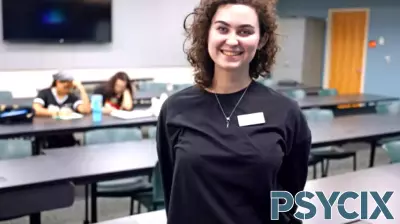
Geisinger Excited About Teaching at SCCKate Geisinger has joined Southeastern Community College as a full-time psychology instructor, bringing with her a strong commitment to student learning and intellectual growth. Geisinger says her...

October 7, 2026 - 03:39
Associate professor of psychology brings evidence-based mental wellness support directly to college studentsKaileigh Byrne, Wallace R. Roy Distinguished Associate Professor of psychology in the College of Behavioral, Social and Health Sciences, has spent years studying how people make decisions under...

October 6, 2026 - 01:22
Inside the Mind: How SailGP Teams Handle Pressure and Build Winning CulturesThe human side of elite sailing takes center stage in the newest chapter of SailGP`s documentary series Racing on the Edge, created alongside Rolex. This installment shifts focus away from boat...