Marriage Isn't the Gold Standard for Relationship Stability Anymore
September 7, 2025 - 12:45

In recent years, the perception of marriage as the ultimate commitment has shifted significantly. A psychologist's insights reveal two compelling reasons why marriage may no longer be viewed as an automatic guarantee of relationship stability.
Firstly, the evolving societal norms around relationships have led many couples to question traditional commitments. With a growing acceptance of diverse relationship structures, individuals are increasingly prioritizing personal fulfillment and emotional connection over formalizing their unions through marriage. This shift suggests that love and commitment can exist outside the confines of a legal contract.
Secondly, research indicates that the quality of a relationship is more crucial than its legal status. Factors such as communication, trust, and mutual respect play a pivotal role in sustaining long-term partnerships. Couples who focus on nurturing these elements often find greater satisfaction, regardless of whether they are married or not.
As society continues to evolve, the definition of commitment is being redefined, challenging the long-held belief that marriage is the ultimate benchmark for relationship success.
MORE NEWS

October 9, 2026 - 01:11
Psychology Professors Raise Concerns About AI Dependence in StudentsPsychology professors are expressing growing concern that students` increasing reliance on artificial intelligence tools may be weakening essential cognitive and academic skills. In a recent...

October 8, 2026 - 15:57
Imitation Is How Children Learn More Than Just WordsWhen a toddler suddenly starts echoing a parent`s words, facial expressions or gestures, it can look like simple mimicry. Developmental psychology research, however, shows that imitation is closely...
October 7, 2026 - 21:42
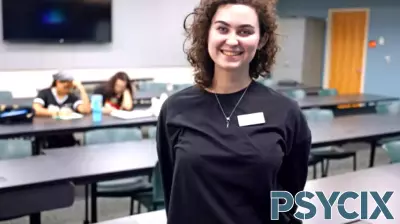
Geisinger Excited About Teaching at SCCKate Geisinger has joined Southeastern Community College as a full-time psychology instructor, bringing with her a strong commitment to student learning and intellectual growth. Geisinger says her...

October 7, 2026 - 03:39
Associate professor of psychology brings evidence-based mental wellness support directly to college studentsKaileigh Byrne, Wallace R. Roy Distinguished Associate Professor of psychology in the College of Behavioral, Social and Health Sciences, has spent years studying how people make decisions under...