Evaluating the Visual Cognition Limits of Multi-Modal AI Models
February 6, 2025 - 19:02

Over the past decades, computer scientists have created increasingly advanced artificial intelligence (AI) models, some of which can perform similarly to humans on specific tasks. The extent to which these models can understand and interpret visual information has become a critical area of research. Recent studies have employed psychology-based tasks to assess the cognitive capabilities of multi-modal large language models (LLMs) in visual cognition.
Researchers have designed experiments that mimic human cognitive processes to evaluate how well these AI systems can recognize and interpret images, as well as their ability to make inferences based on visual data. The findings indicate that while these models show remarkable proficiency in certain scenarios, they also exhibit limitations in understanding context and nuance, which are often intuitive for humans.
This research not only sheds light on the current capabilities of AI in visual cognition but also highlights the need for further advancements. As AI continues to evolve, understanding its cognitive boundaries will be essential for developing more sophisticated and reliable systems that can assist in various applications, from healthcare to autonomous vehicles.
MORE NEWS

October 9, 2026 - 01:11
Psychology Professors Raise Concerns About AI Dependence in StudentsPsychology professors are expressing growing concern that students` increasing reliance on artificial intelligence tools may be weakening essential cognitive and academic skills. In a recent...

October 8, 2026 - 15:57
Imitation Is How Children Learn More Than Just WordsWhen a toddler suddenly starts echoing a parent`s words, facial expressions or gestures, it can look like simple mimicry. Developmental psychology research, however, shows that imitation is closely...
October 7, 2026 - 21:42
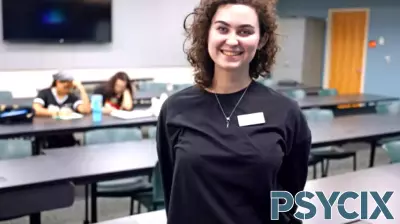
Geisinger Excited About Teaching at SCCKate Geisinger has joined Southeastern Community College as a full-time psychology instructor, bringing with her a strong commitment to student learning and intellectual growth. Geisinger says her...

October 7, 2026 - 03:39
Associate professor of psychology brings evidence-based mental wellness support directly to college studentsKaileigh Byrne, Wallace R. Roy Distinguished Associate Professor of psychology in the College of Behavioral, Social and Health Sciences, has spent years studying how people make decisions under...