Profiling Criminals: Science or Art?
26 November 2025
Criminal profiling. It sounds like something straight out of a crime TV show, right? You know, the genius detective walks into a crime scene, glances around for five minutes, and then delivers a detailed description of the criminal—down to their favorite brand of coffee. But is it really that simple? Is profiling criminals a precise science rooted in facts and figures, or is it more of an art, relying on intuition and experience?
This question has been the center of debate for decades. Some argue that profiling is a systematic, evidence-based practice. Others believe it's more of a craft, where seasoned profilers rely on gut feelings and instincts. So, which one is it? Let’s dive in.

What Exactly Is Criminal Profiling?
Before we get into whether profiling is science or art, let’s first clarify what it is. Criminal profiling, also known as offender profiling or psychological profiling, is a technique used by law enforcement to identify potential suspects based on behavioral patterns and clues left behind at a crime scene.The goal? To create a psychological, emotional, and physical profile of the person likely to have committed the crime. Profilers look at the nature of the crime, the way it was committed, and any other behavioral cues to make predictions about the perpetrator’s personality, habits, and even future actions.
It’s a bit like putting together pieces of a puzzle, but with human behavior as the guide. Sounds cool, right? But how reliable is it?
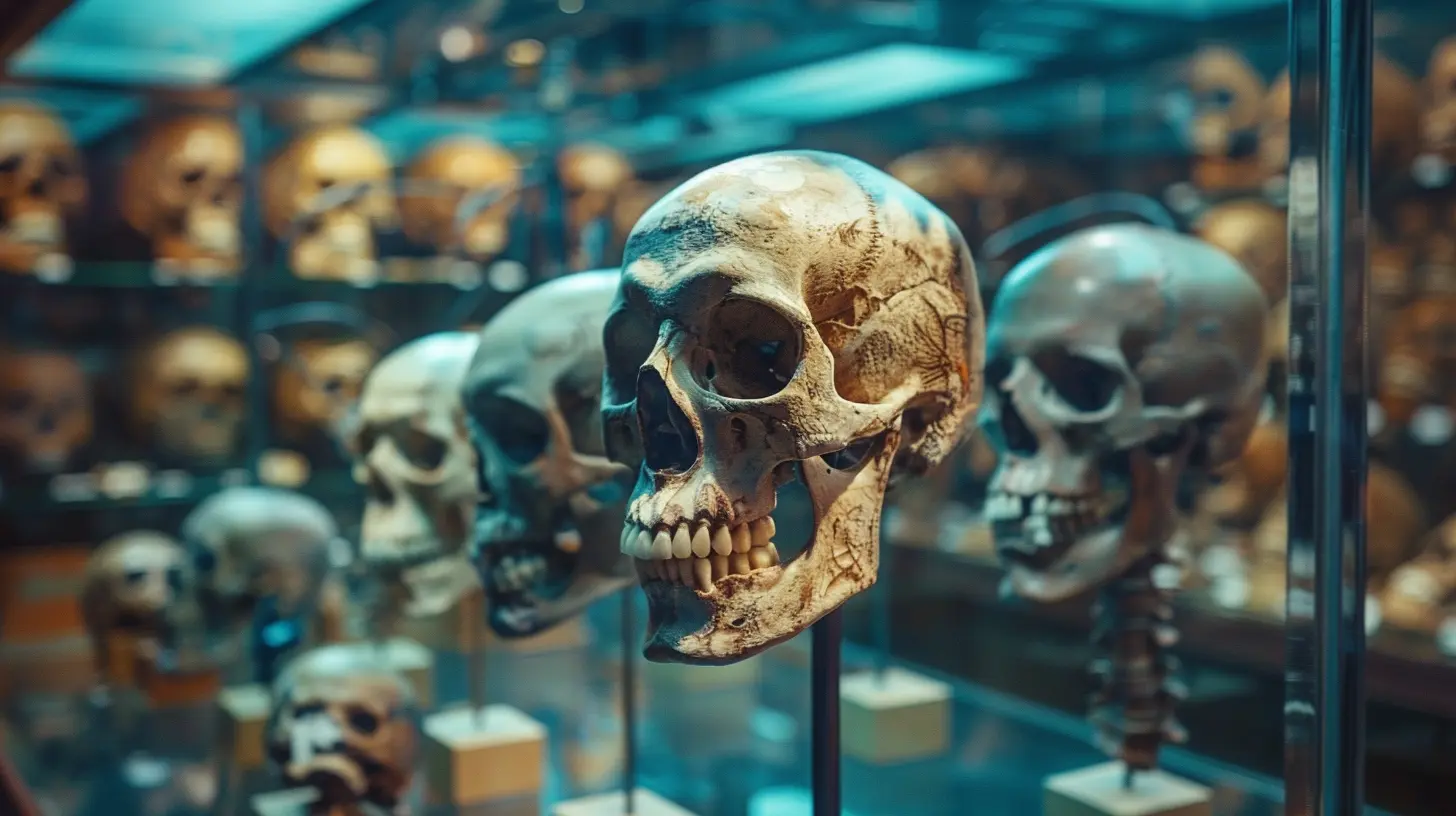
The Science Behind Criminal Profiling
Let’s tackle the "science" aspect first. Academically speaking, the term "science" refers to something that can be tested, measured, and proven through empirical evidence. So, is criminal profiling scientific?Evidence-Based Methods
There are certainly parts of profiling that rely on hard data. For example, geographical profiling uses statistics and patterns to predict where a criminal might live based on the locations of their crimes. This method has a firm foundation in mathematics and spatial analysis, making it a relatively scientific approach.Similarly, behavioral patterns have been studied extensively. For instance, a lot of work has gone into understanding serial killers. Studies have shown that many serial killers exhibit common traits, such as antisocial behavior, childhood trauma, or a fascination with power and control. These traits can help profilers narrow down potential suspects.
The FBI’s Behavioral Science Unit
Profiling as we know it today really took shape in the 1970s when the FBI’s Behavioral Science Unit (BSU) started interviewing notorious criminals like Ted Bundy and Charles Manson. These interviews were used to develop criminal typologies—the idea that certain types of crimes are committed by certain types of people.This approach, known as criminal investigative analysis, combines psychology, criminology, and investigation techniques into one cohesive method. It has been used successfully in numerous cases, which makes it seem pretty scientific, right?
But here’s where things get murky.

The Artistic Side of Profiling
While there’s undoubtedly a scientific foundation to criminal profiling, there’s also a side to it that feels more like an art form.Intuition and Experience
Profilers often rely on their gut feelings, instincts, and years of experience. Imagine you've been a profiler for decades. You’ve interviewed criminals, studied crime scenes, and worked on countless cases. Over time, you develop a kind of sixth sense for spotting patterns that others might miss.For example, a seasoned profiler might walk into a crime scene and sense whether the crime was impulsive or premeditated. They might notice small, subtle details—like the position of a body or the type of weapon used—that suggest something about the perpetrator’s emotional state.
This is where profiling becomes more of an art. It’s not just about following a checklist of behaviors or running statistical models. It’s about interpreting the unique details of each crime and using intuition to fill in the gaps.
Case Studies: Where Art Meets Science
Let’s look at a few famous cases to see how profiling blends both science and art:The Case of the Mad Bomber
One of the earliest successful uses of criminal profiling was in the case of the Mad Bomber, who terrorized New York City in the 1940s and 50s. The police were stumped until they brought in a psychiatrist named Dr. James Brussel.Dr. Brussel analyzed the bomber’s behavior and came up with an eerily accurate profile. He predicted the bomber would be a middle-aged man, paranoid, living with relatives, and—here’s the kicker—wearing a buttoned-up suit when arrested. Sure enough, when police arrested the bomber, he was wearing a buttoned-up suit.
However, Dr. Brussel didn’t use any sophisticated scientific models to come to his conclusions. Instead, he relied on his understanding of human psychology and the patterns he’d observed in other cases. It was more art than science.
The BTK Killer
Another fascinating example is the case of the BTK Killer (Bind, Torture, Kill), who terrorized Wichita, Kansas, for decades. Profilers initially struggled with the case because the killer didn’t fit any of the usual molds. He was a church leader, family man, and community member—hardly the typical profile of a serial killer.In this case, the art of profiling fell short. It took DNA evidence, not behavioral analysis, to finally catch the killer. This case highlights the limitations of profiling and shows that intuition and experience can only go so far.
The Limitations of Criminal Profiling
While criminal profiling can be incredibly useful, it’s far from perfect. There are a few major limitations to consider:It’s Not Always Accurate
Profiling can sometimes lead investigators down the wrong path. One famous example is the case of the D.C. Snipers in 2002. Criminal profilers predicted that the snipers were likely to be white males in their 20s or 30s, acting alone. In reality, the snipers were two African-American men, one of whom was a teenager.Because the profile didn’t match the actual criminals, police initially overlooked key evidence and wasted valuable time.
It Can Be Biased
Another issue is that profiling can be influenced by cultural and personal biases. Profilers, like all humans, have subconscious biases that can affect their work. This can lead to racial or gender profiling that is not based on facts but on stereotypes.It’s Not a Standalone Tool
Profiling should never be the sole tool used in an investigation. It’s more like a piece of the puzzle. While it can provide valuable insights, it needs to be combined with other investigative methods—like forensic evidence, witness statements, and good old-fashioned detective work.Science or Art? The Final Verdict
So, is profiling criminals a science or an art? The answer, unsurprisingly, is both.The Science
There’s no doubt that criminal profiling has a scientific foundation. Techniques like geographical profiling and behavioral analysis are rooted in data and research. Over the years, psychologists and criminologists have gathered a wealth of information about criminal behavior, and this knowledge can be applied in real-world cases.The Art
At the same time, profiling requires a level of intuition and creativity that isn’t easily quantifiable. Every crime scene is unique, and experienced profilers often rely on their instincts to make connections that aren’t immediately obvious. This is where the art comes in.A Hybrid Approach
The most successful criminal profilers are those who can blend both science and art. They use data and research as their foundation but aren’t afraid to trust their gut when the situation calls for it. It’s a bit like being a chef—you need to know the science behind cooking, but the best dishes come from a dash of creativity and a pinch of intuition.
Conclusion
In the end, criminal profiling isn’t a straightforward science or an elusive art. It’s a combination of both. While we can rely on certain patterns of behavior and statistical models, human behavior is far too complex to be boiled down to a formula. Profilers must balance their knowledge of psychology and criminology with their instincts and experience to get inside the minds of criminals.So, the next time you watch a crime show and see the detective whip up a profile like they’re making a sandwich, remember—it’s not that simple. Profiling is as much about understanding the nuances of human behavior as it is about following the facts.
all images in this post were generated using AI tools
Category:
Forensic PsychologyAuthor:

Christine Carter
Discussion
rate this article
1 comments
Ashley McGonagle
Great read! It’s fascinating how profiling blends scientific methods with the nuances of human behavior. Striking that balance seems challenging but essential for understanding the complexities behind criminal minds. Thanks for sharing these insights!
November 26, 2025 at 6:00 PM
Christine Carter
Thank you for your thoughtful comment! I'm glad you found the blend of science and human behavior intriguing. Balancing these elements is indeed crucial for effective profiling.