Transform Your Love Life with These Thought-Provoking Questions
November 8, 2025 - 23:08

Ask this set of relationship questions in the right way, with the right intentions, and it won’t be long until you start seeing real change in your love life. Engaging in meaningful conversations can strengthen the bond between partners and foster a deeper understanding of each other’s emotional landscapes.
Start by asking open-ended questions that encourage vulnerability. For instance, inquire about each other’s fears and aspirations within the relationship. This not only promotes honesty but also builds trust. Another essential question revolves around identifying each partner’s love language. Understanding how each person expresses and receives love can lead to more fulfilling interactions.
Lastly, consider discussing moments of conflict and how they were navigated. Reflecting on past challenges can illuminate growth areas and reinforce the commitment to overcome future obstacles together. By embracing these discussions, couples can cultivate a more profound connection and enhance their overall relationship satisfaction.
MORE NEWS

October 9, 2026 - 01:11
Psychology Professors Raise Concerns About AI Dependence in StudentsPsychology professors are expressing growing concern that students` increasing reliance on artificial intelligence tools may be weakening essential cognitive and academic skills. In a recent...

October 8, 2026 - 15:57
Imitation Is How Children Learn More Than Just WordsWhen a toddler suddenly starts echoing a parent`s words, facial expressions or gestures, it can look like simple mimicry. Developmental psychology research, however, shows that imitation is closely...
October 7, 2026 - 21:42
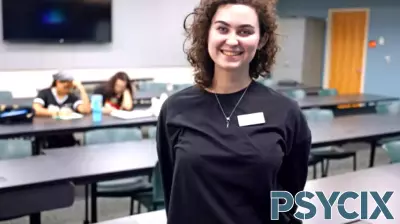
Geisinger Excited About Teaching at SCCKate Geisinger has joined Southeastern Community College as a full-time psychology instructor, bringing with her a strong commitment to student learning and intellectual growth. Geisinger says her...

October 7, 2026 - 03:39
Associate professor of psychology brings evidence-based mental wellness support directly to college studentsKaileigh Byrne, Wallace R. Roy Distinguished Associate Professor of psychology in the College of Behavioral, Social and Health Sciences, has spent years studying how people make decisions under...