Psychology says warm, helpful people have few friends as they employ usefulness as a defense mechanism, which makes them valuable not vulnerable
July 6, 2026 - 14:23
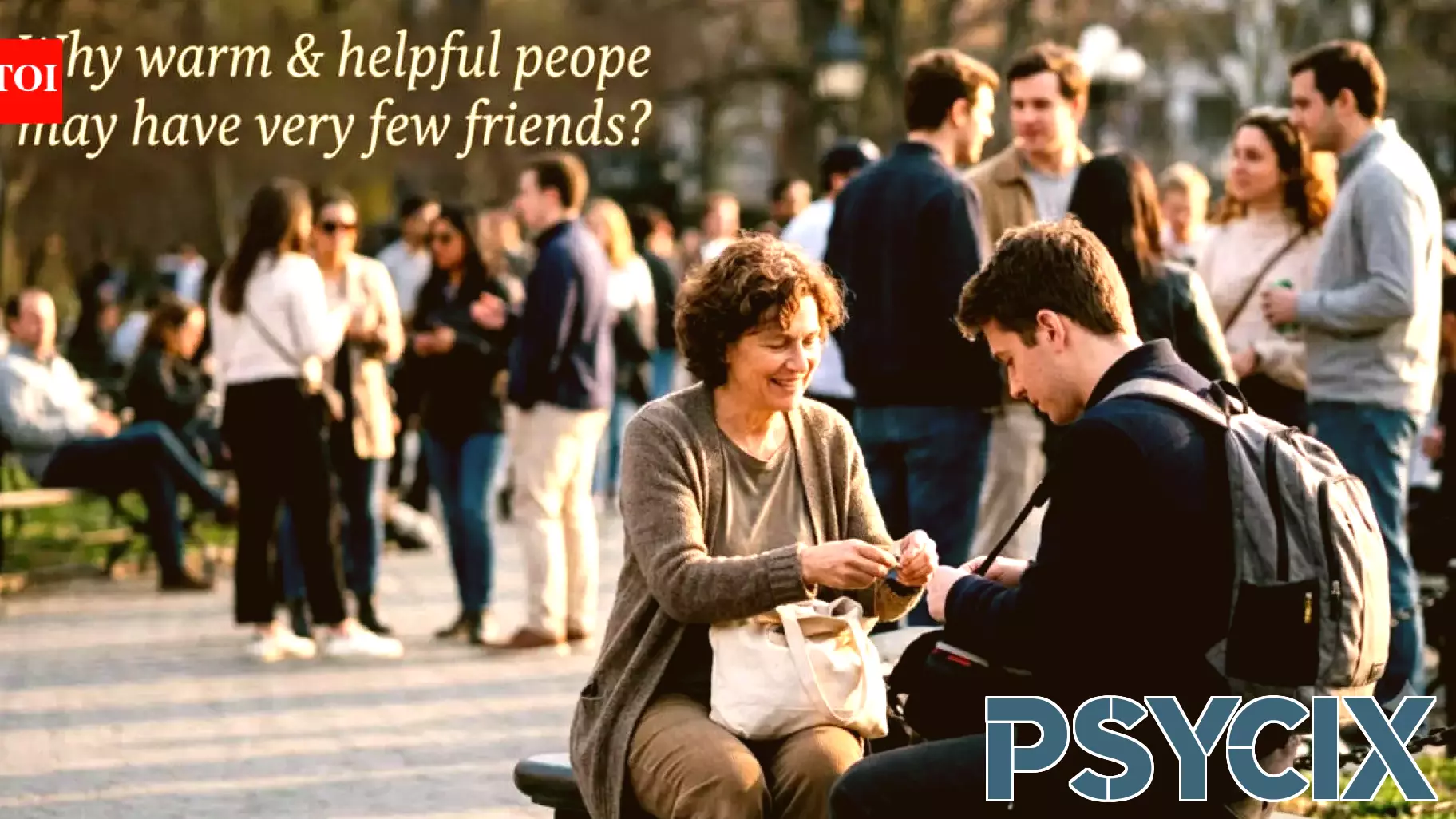
We all have that one friend who remembers the coffee order, shows up with soup when sick, and is happy to pick you up from the airport at 5 am. They are in every group chat, and yet, if you ask around, nobody really knows what is going on in their life. According to recent psychological observations, this dynamic is not random. Warm, helpful people often end up with a surprisingly small circle of close friends because they employ usefulness as a defense mechanism.
The theory suggests that these individuals have learned to make themselves valuable rather than vulnerable. By constantly offering help, they create a social role that is hard to reject. Nobody says no to a ride or a home-cooked meal. But this role also keeps others at a distance. The helper becomes a resource, not a person with needs. Their own struggles, fears, and desires remain hidden behind a wall of service.
The problem is that being useful is safe. It requires less emotional risk than asking for support. Over time, the helper attracts people who need things, not people who want to know them. The result is a paradox: a person surrounded by acquaintances who appreciate them, but who has very few true friends. The defense mechanism works, but it also isolates. True friendship requires mutual vulnerability, and that is something the "useful" person often avoids.
MORE NEWS

October 4, 2026 - 06:25
Why People Who Stop Seeking Approval Keep Quiet About These Personal ThingsPeople who have stopped chasing approval tend to share less about themselves, and the change is not about secrecy. It is about where the validation comes from. For them, the proof is in the...

October 3, 2026 - 18:25
The Psychology of Desire: Why a Cheap Pen Can Feel Like a Luxury ItemA basic Bic pen costs less than a quarter. A Hermes handbag can cost more than a car. On the surface, these two objects share nothing. Yet both can trigger the same psychological response in a...
October 3, 2026 - 14:38
Understanding How Video Games Shape Human BehaviorUMSL alum Nick Bowman returned to campus to explain how video games function as complex communication systems demanding cognitive, emotional and social engagement. His presentation focused on the...

October 2, 2026 - 18:14
Rethinking Wealth: Why Financial Knowledge Alone Is Not EnoughFinancial educator and investor Dr. Jatali Bellanton is challenging the way people think about money, success, and the decisions that shape long term stability. In a recent conversation, she...