Living Life on Your Own Terms: Insights from an Expert
December 29, 2025 - 20:57

In a recent discussion, an expert delved into the psychology of living life on one's own terms, emphasizing the importance of being unbothered by external opinions. This approach, often exemplified by public figures, showcases a profound understanding of self-worth and personal values. The expert highlighted that truly unbothered individuals, like Akshaye Khanna, prioritize their beliefs and aspirations over societal expectations, which can often lead to emotional resilience.
Living authentically means embracing one's identity and making choices that align with personal goals rather than succumbing to external pressures. However, this mindset does not equate to ignoring constructive criticism. Instead, it involves discerning between valuable feedback and noise. The expert pointed out that a balance must be struck; individuals should be open to insights that can foster growth while remaining steadfast in their personal convictions.
Ultimately, the journey towards self-acceptance and independence is one that requires courage and introspection, allowing individuals to navigate life with confidence and clarity.
MORE NEWS

October 9, 2026 - 01:11
Psychology Professors Raise Concerns About AI Dependence in StudentsPsychology professors are expressing growing concern that students` increasing reliance on artificial intelligence tools may be weakening essential cognitive and academic skills. In a recent...

October 8, 2026 - 15:57
Imitation Is How Children Learn More Than Just WordsWhen a toddler suddenly starts echoing a parent`s words, facial expressions or gestures, it can look like simple mimicry. Developmental psychology research, however, shows that imitation is closely...
October 7, 2026 - 21:42
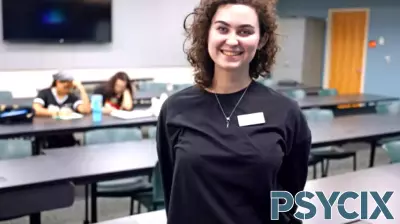
Geisinger Excited About Teaching at SCCKate Geisinger has joined Southeastern Community College as a full-time psychology instructor, bringing with her a strong commitment to student learning and intellectual growth. Geisinger says her...

October 7, 2026 - 03:39
Associate professor of psychology brings evidence-based mental wellness support directly to college studentsKaileigh Byrne, Wallace R. Roy Distinguished Associate Professor of psychology in the College of Behavioral, Social and Health Sciences, has spent years studying how people make decisions under...