Is AI Taking Over the Role of Your Therapist?
February 24, 2025 - 03:41

Is AI replacing your therapist? Not if you look closer. As artificial intelligence continues to advance, many people are questioning its role in mental health care. While AI-driven applications offer convenient support, they cannot replicate the nuanced understanding and empathy of a trained therapist.
These digital tools can assist with basic mental health needs, providing users with coping strategies and resources. However, they lack the ability to engage in deep, meaningful conversations that often lead to breakthroughs in therapy. Human therapists bring their unique experiences and emotional intelligence, allowing them to build trust and rapport with clients, which is essential for effective treatment.
Moreover, mental health issues are complex and often require personalized approaches. While AI can analyze data and recognize patterns, it falls short in addressing the individual needs of each person. The therapeutic relationship is built on human connection, something that AI cannot fully emulate. As technology evolves, it is crucial to remember that AI should complement, not replace, the invaluable role of human therapists in mental health care.
MORE NEWS

October 9, 2026 - 01:11
Psychology Professors Raise Concerns About AI Dependence in StudentsPsychology professors are expressing growing concern that students` increasing reliance on artificial intelligence tools may be weakening essential cognitive and academic skills. In a recent...

October 8, 2026 - 15:57
Imitation Is How Children Learn More Than Just WordsWhen a toddler suddenly starts echoing a parent`s words, facial expressions or gestures, it can look like simple mimicry. Developmental psychology research, however, shows that imitation is closely...
October 7, 2026 - 21:42
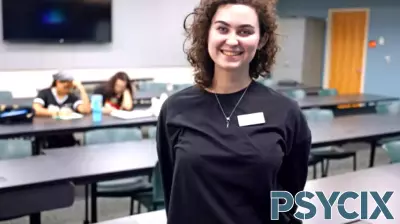
Geisinger Excited About Teaching at SCCKate Geisinger has joined Southeastern Community College as a full-time psychology instructor, bringing with her a strong commitment to student learning and intellectual growth. Geisinger says her...

October 7, 2026 - 03:39
Associate professor of psychology brings evidence-based mental wellness support directly to college studentsKaileigh Byrne, Wallace R. Roy Distinguished Associate Professor of psychology in the College of Behavioral, Social and Health Sciences, has spent years studying how people make decisions under...