From Quantum Cats to Cloud Thoughts: The Evolution of AI Insight
January 5, 2025 - 03:16

In today's AI-driven landscape, the concept of "Schrödinger's cat" has taken on a new form, evolving into the phrase "your thought in the cloud." This shift symbolizes the transition from theoretical possibilities to tangible insights, reflecting the rapid advancements in artificial intelligence and cloud computing.
As AI technologies become more sophisticated, they enable us to harness vast amounts of data, transforming abstract ideas into actionable intelligence. The metaphor of Schrödinger's cat, which illustrates the paradox of superposition in quantum mechanics, resonates with the way AI can analyze multiple scenarios simultaneously. Just as the cat exists in a state of uncertainty until observed, our thoughts and ideas can remain dormant until they are processed by AI systems.
This evolution signifies a paradigm shift in how we approach problem-solving and decision-making. The integration of AI into our daily lives empowers individuals and organizations to explore new realms of creativity and innovation, ultimately collapsing the uncertainty of potential into the clarity of insight. As we continue to navigate this new frontier, the possibilities are as limitless as our imagination.
MORE NEWS

October 9, 2026 - 01:11
Psychology Professors Raise Concerns About AI Dependence in StudentsPsychology professors are expressing growing concern that students` increasing reliance on artificial intelligence tools may be weakening essential cognitive and academic skills. In a recent...

October 8, 2026 - 15:57
Imitation Is How Children Learn More Than Just WordsWhen a toddler suddenly starts echoing a parent`s words, facial expressions or gestures, it can look like simple mimicry. Developmental psychology research, however, shows that imitation is closely...
October 7, 2026 - 21:42
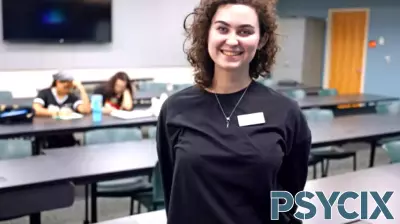
Geisinger Excited About Teaching at SCCKate Geisinger has joined Southeastern Community College as a full-time psychology instructor, bringing with her a strong commitment to student learning and intellectual growth. Geisinger says her...

October 7, 2026 - 03:39
Associate professor of psychology brings evidence-based mental wellness support directly to college studentsKaileigh Byrne, Wallace R. Roy Distinguished Associate Professor of psychology in the College of Behavioral, Social and Health Sciences, has spent years studying how people make decisions under...