Are you silent in meetings? Psychology says it’s not a confidence problem — The hidden pattern of your ins
May 6, 2026 - 02:25
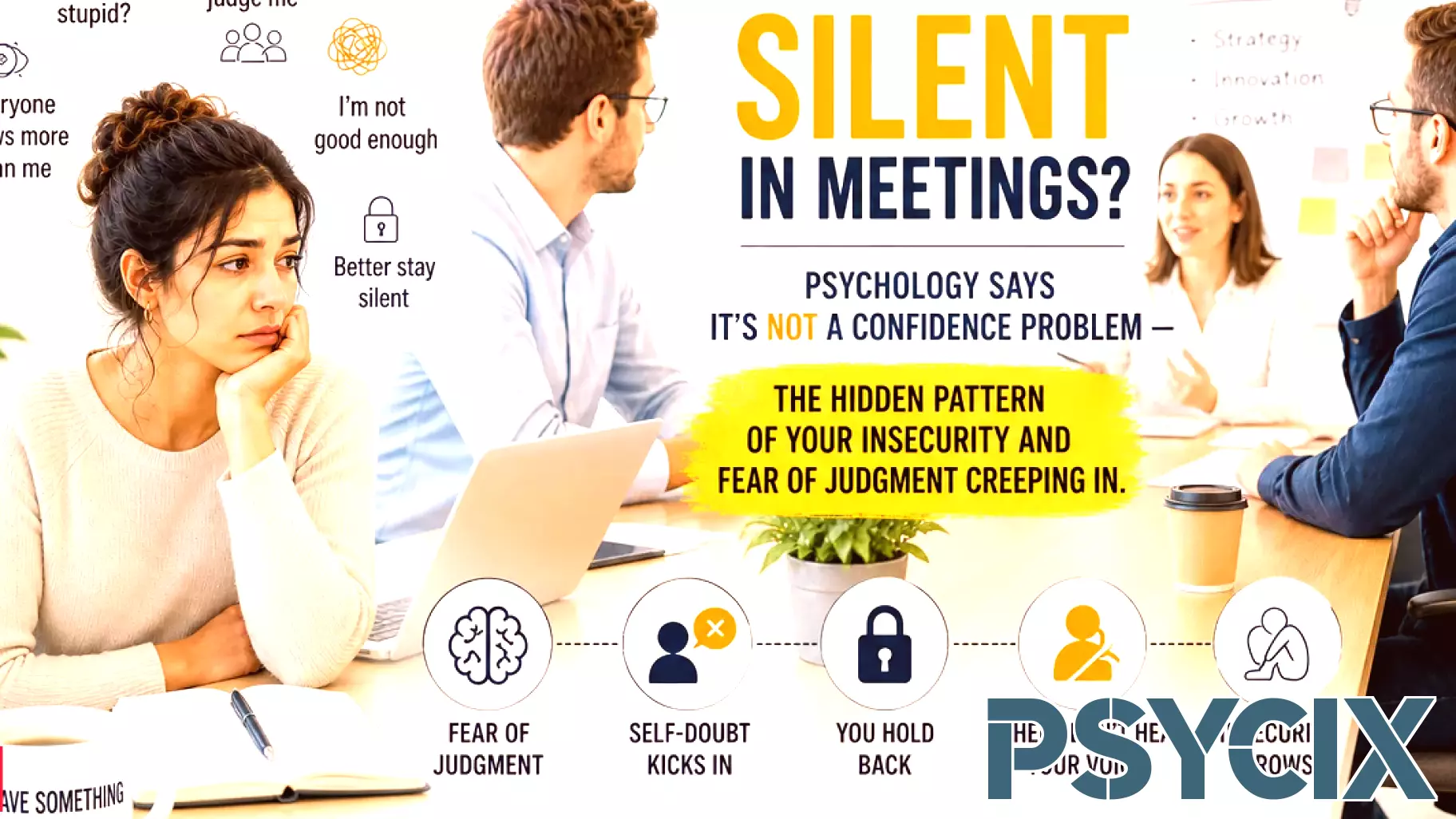
For many, the urge to speak is overridden by a deep need to process information internally. These individuals, often called "thinkers" in psychological models, listen carefully, weigh options, and formulate complete ideas before contributing. When the conversation moves too fast, they hold back. Others remain silent because they sense that their input will be dismissed or overshadowed by louder voices, a pattern that can become self-reinforcing over time.
Workplace culture plays a major role. Meetings dominated by rapid-fire brainstorming or hierarchical power dynamics can suppress quieter personalities, even when those individuals have valuable insights. Some people also stay quiet because they are highly attuned to social cues and prefer to avoid conflict or awkwardness. In these cases, silence is a form of social intelligence, not weakness.
The hidden pattern is that quietness often signals a different kind of engagement. Rather than assuming a confidence problem, managers and colleagues might benefit from recognizing that silence can reflect careful analysis, emotional awareness, or a preference for written communication. Understanding this can shift how teams value diverse contributions and reduce the pressure on quieter members to conform to a talkative norm.
MORE NEWS

September 18, 2026 - 08:45
Psychology says people who stand in queue for hours to buy an iPhone aren't necessarily Apple fans, they mEvery September, crowds gather outside Apple stores around the world. Some arrive days early, armed with camping chairs and portable chargers. The behavior puzzles observers who note that the same...

September 17, 2026 - 20:04
My holiday is still a year away. It’s already boosting my mental healthThe countdown has begun, even if the calendar says otherwise. We are still months from ordering our first suspiciously expensive waterside cocktail, but Greece has joyfully entered the group chat....

September 17, 2026 - 15:41
The 'Hibernation Instinct' Is Real — This Is the Psychology Behind the Desire to Hunker Down When the Weather Starts to ShiftThe urge to retreat indoors when temperatures drop is not laziness. It is biology. Researchers describe a hibernation instinct that lingers in humans, a leftover from ancestors who conserved energy...

September 16, 2026 - 19:19
Psychology explains why parents keep old toys for years even when they are broken, unused or no longer neeParents often keep old toys long after children have outgrown them. The items may be broken, missing pieces, or stored in boxes for years. Psychology offers a clear explanation for this behavior....