Why Emotions Make Biases Stronger
27 November 2026
Emotions are not the enemy of clear thinking. They are the raw material of it. But they are also a magnifying glass held over every cognitive bias you carry, and most people never notice the glass is there.
Here is the uncomfortable truth: a bias operating in a calm mind is a quiet thing. It nudges. A bias operating in an emotional mind is a bullhorn. It does not nudge. It shoves, and it convinces you the shove was your own idea.
Understanding why this happens is not an academic exercise. It is the difference between making decisions you can defend six months later and making decisions you will spend six months cleaning up.
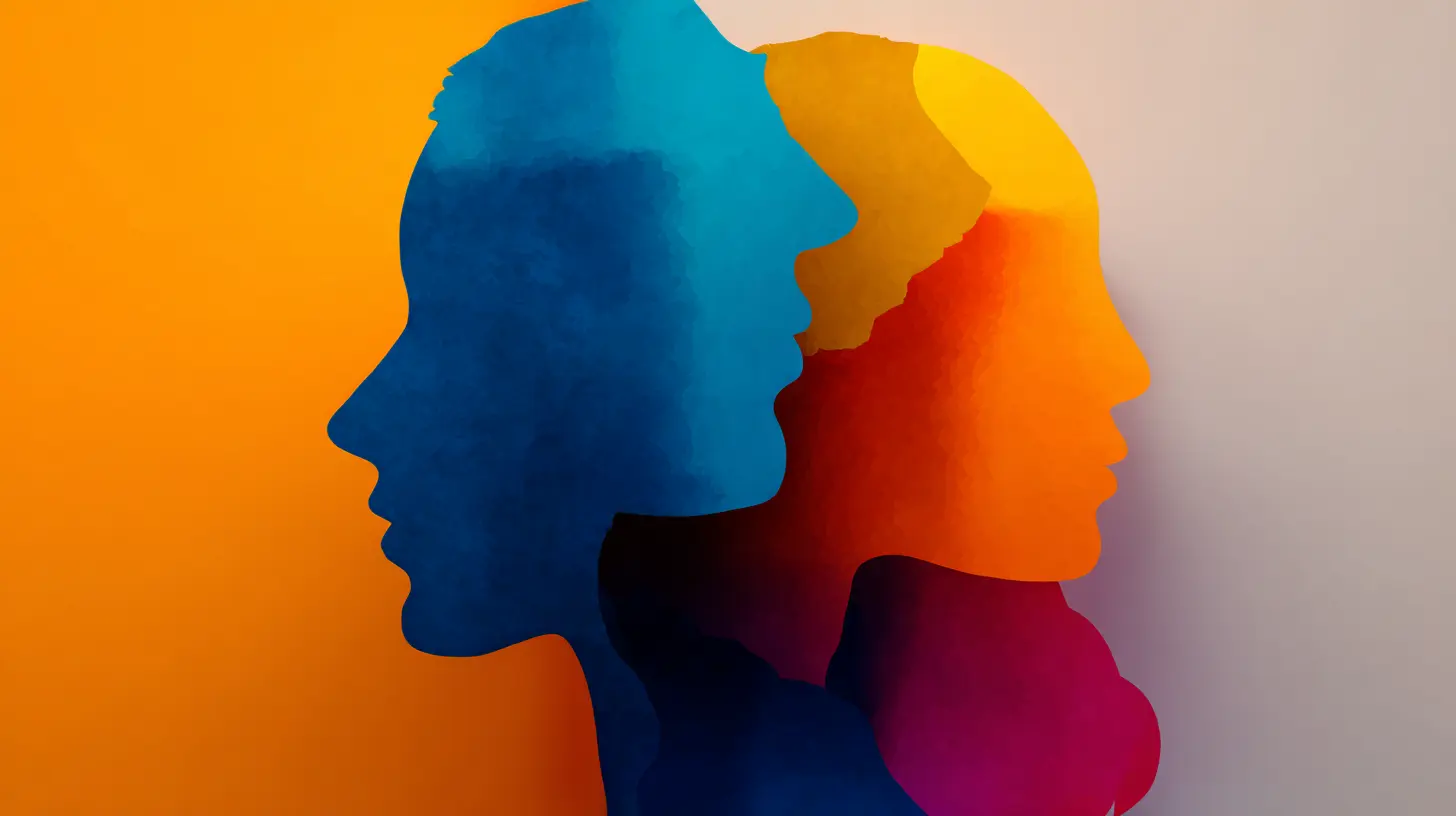
The Core Mechanism: Emotion as a Volume Knob
Cognitive biases are mental shortcuts. Your brain uses them because they are cheap and usually good enough. The availability heuristic, confirmation bias, anchoring, the halo effect, and dozens of others exist because fast, frugal thinking kept our ancestors alive long enough to reproduce.Emotion changes the economics of that shortcut system. When you are emotionally activated, your brain shifts resources away from deliberate, effortful processing and toward rapid, pattern-matching response. This is not a defect. It is a design feature. If you are being chased, you do not want to weigh the pros and cons of running left versus right. You want to move.
The problem is that this same shift happens when you are not being chased. It happens in performance reviews, salary negotiations, political arguments, and text messages sent at midnight. The volume knob on every bias gets turned up, and the part of your mind that would normally say "wait, let me check that" gets quieter.
Think of it as a signal-to-noise problem. In a calm state, your reasoning can separate a strong signal from emotional noise. Under emotional load, the noise rises to the level of the signal. You can no longer tell the difference between what is true and what feels true, because feeling true is now doing all the work.
Why the Brain Does This: A Functional Explanation
It helps to stop treating this as a flaw and start treating it as a trade-off.Emotions carry information. Anxiety tells you something is uncertain or threatening. Anger tells you a boundary has been crossed. Sadness tells you something valuable has been lost. These signals are useful. The brain did not build them to sabotage you.
But emotions are also blunt instruments. They evolved to prioritize action over accuracy. When an emotion is strong, the brain treats the associated conclusion as urgent, and urgency crowds out verification. You do not check the map when the house is on fire. You run.
This is why emotional intensity and cognitive rigidity rise together. The stronger the feeling, the less willing you are to consider alternatives, and the more confident you become in the conclusion the feeling points toward. Confidence, in this state, is not a measure of accuracy. It is a measure of emotional pressure.
That distinction matters enormously. Most people use confidence as a proxy for correctness. Under emotional load, that proxy breaks.
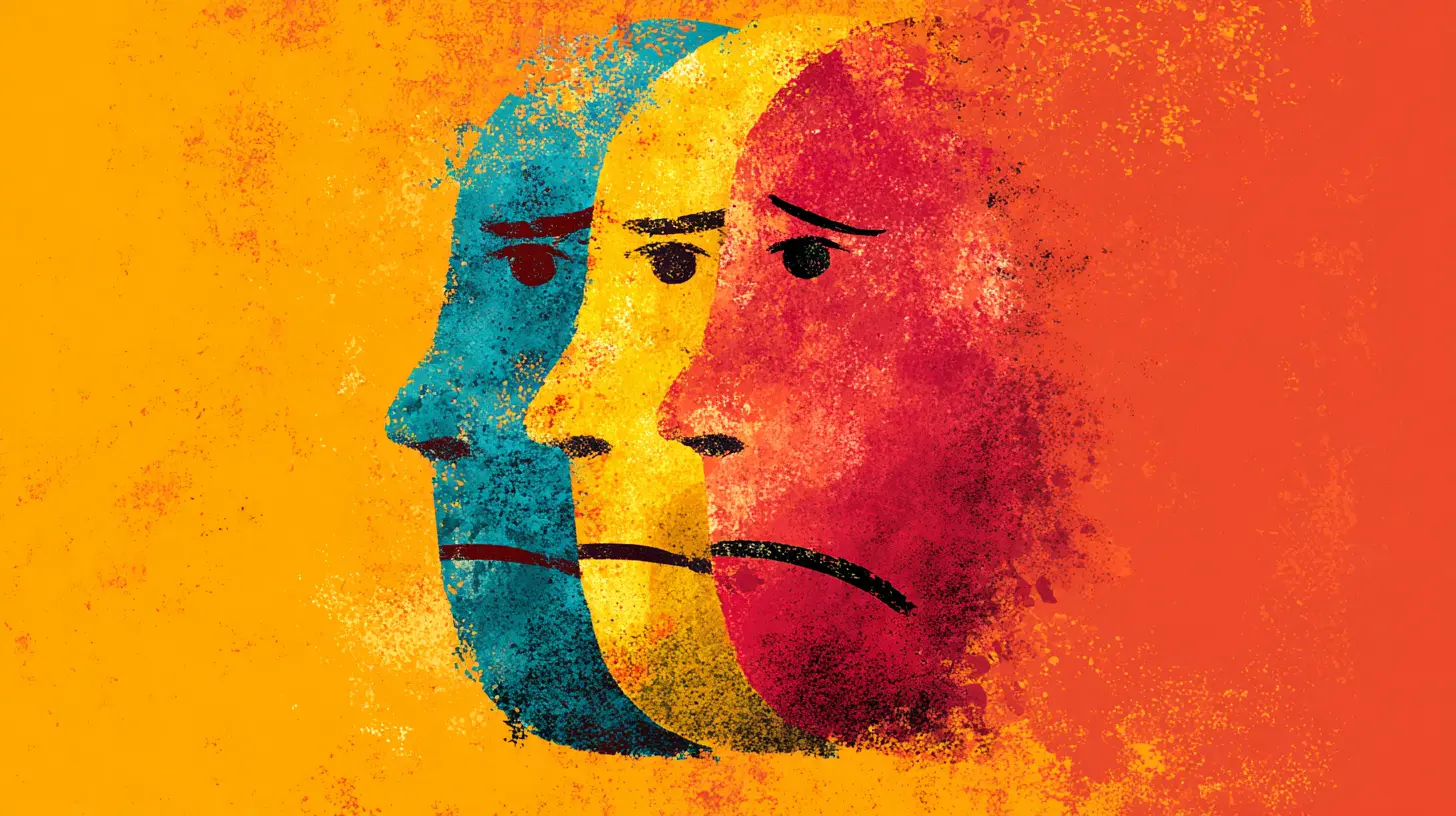
The Specific Biases Emotion Amplifies Most
Not all biases are equally sensitive to emotion. Some are relatively stable. Others become dramatically stronger. Knowing which ones to watch is more useful than knowing the full catalogue.Confirmation Bias
Confirmation bias is the tendency to seek, interpret, and remember information that supports what you already believe. Emotion supercharges it because emotion determines what you want to be true.When you are angry at a colleague, you do not evaluate their behavior neutrally. You scan for evidence of bad intent and you find it, because the search is motivated. The same behavior, observed when you are calm, might read as careless. Observed when you are resentful, it reads as malicious. The evidence did not change. The filter did.
This is why arguments between people who are already frustrated so rarely produce resolution. Each person is running a motivated search, and motivated searches reliably return the result the searcher wanted.
The Availability Heuristic
You judge the likelihood of something by how easily examples come to mind. Emotion makes emotionally charged examples come to mind faster and more vividly.After a frightening flight, plane crashes feel more probable than they are. After a public embarrassment, the memory of it feels like it is happening again every time you think about it, which inflates its apparent importance. Fear and shame both make their associated scenarios feel statistically larger than they are.
The practical consequence: your risk estimates are not stable. They move with your mood, and they move in the direction of whatever you are feeling most strongly.
The Halo and Horn Effects
When you like someone, you tend to assume they are also competent, honest, and fair. When you dislike someone, you tend to assume the opposite. Emotion is the engine here. The warmer the feeling, the wider the halo. The colder, the sharper the horns.This one is especially dangerous in hiring, promotion, and performance evaluation, where the emotional impression is formed early and then quietly recruits every subsequent judgment to support it.
Anchoring
The first number you hear drags your estimate toward it. Emotion makes anchors stickier because it reduces the willingness to revise. If you are anxious about a negotiation, you are more likely to accept the first offer as a reasonable frame rather than challenge it. Anxiety says "don't risk it." The anchor says "this is the range." Together they produce a decision you would not have made calmly.The Sunk Cost Fallacy
You keep investing in something because you have already invested, even when the rational move is to stop. Emotion fuels this through loss aversion and the fear of admitting a mistake. The stronger the emotional attachment to the original decision, the harder it is to walk away, and the more creative the justification for staying becomes.Ingroup Bias
Emotion intensifies tribal thinking. When you feel threatened, belonging to a group feels more important, and the group's boundaries feel sharper. People who are calm can hold nuanced views about outsiders. People who are frightened or angry often cannot, because the emotional system has reclassified outsiders as threats.
The Feedback Loop Nobody Warns You About
Here is where it gets genuinely difficult. Emotion strengthens bias, and strengthened bias produces decisions that generate more emotion.You feel anxious, so you overestimate risk, so you avoid an opportunity, so you feel relief followed by regret, so you feel more anxious about the next opportunity. The loop tightens with each cycle.
The same loop runs in relationships. Resentment makes you interpret ambiguous behavior negatively, which produces conflict, which produces more resentment. Neither person is lying about what they experienced. Both are running a biased filter and calling the output reality.
This is why emotional bias is so resistant to simple correction. You cannot just tell someone to be more objective. The loop is self-reinforcing, and it feels like evidence. Every negative interpretation generates a real emotional response, and that response feels like confirmation that the interpretation was correct.
Breaking the loop requires interrupting it at the level of interpretation, not at the level of feeling. Trying to suppress the emotion usually backfires. Changing the input to the interpretation is what works.
Why "Just Calm Down" Fails
The most common advice for emotional bias is to calm down first and decide later. It sounds sensible. It often fails.First, emotional arousal does not switch off on command. Telling an activated person to be rational is like telling a person holding their hand on a hot stove to relax. The instruction is correct and useless.
Second, some emotions carry information you should not discard. If you feel uneasy about a deal, the unease might be pattern recognition rather than irrationality. Suppressing it wholesale can cost you a genuine warning signal.
Third, delay alone does not fix bias. If you wait an hour and then return to the same interpretation with the same filter, you will reach the same conclusion with more confidence, because now it feels considered. Time helps only if something changes in how you are processing, not just when.
The better approach is not to eliminate emotion but to change your relationship to it. Treat the feeling as data about your state, not as data about the world. Then verify the world separately.
A Practical Framework: Separate, Label, Test, Decide
This is a sequence you can run in a few minutes for small decisions and over days for large ones.Step 1: Separate the feeling from the claim
Write down the conclusion you are drawn to. Then write down the emotion driving it. Keep them on separate lines. "I should not send this email" and "I am afraid of the conflict" are different statements. Conflating them is where the trouble starts.Step 2: Label the emotion precisely
Vague labels are weak tools. "I feel bad" tells you nothing actionable. "I feel humiliated because I was corrected in front of the team" tells you exactly which bias is likely active and what evidence you should scrutinize.Research on emotion labeling consistently finds that naming an emotion precisely reduces its intensity. This is not mysticism. Precise labeling engages language and reasoning networks that compete with the raw emotional response.
Step 3: Test the claim as if someone else made it
Ask: if a stranger presented this conclusion to me, what evidence would I demand? Then demand it of yourself. This is the single most effective debiasing move available, because it exploits the asymmetry between how we evaluate our own claims and how we evaluate others'.Step 4: Decide with a stated confidence level
Commit to a decision and attach a rough confidence estimate. "I am about 60 percent confident this is the right call." This does two things. It forces you to acknowledge uncertainty, which reduces overconfidence. And it gives you a record you can check later, which improves your calibration over time.Step 5: Set a review point
Schedule a moment to revisit the decision when the emotion has faded. Compare what you expected with what happened. This is how you build the pattern recognition that eventually makes the whole process faster.When to Trust the Emotion and When to Override It
Blanket skepticism toward emotion is as foolish as blanket trust. The skill is discrimination.Trust the emotion more when it is specific, when it is proportional to the trigger, when it recurs across different contexts, and when you have a track record of that particular feeling being accurate. A nagging unease about a person that shows up in multiple settings and does not fade is worth taking seriously.
Override the emotion more when it is global, when it is disproportionate, when it appeared suddenly without a clear trigger, when you are tired or hungry or sleep deprived, and when the emotion conveniently supports the conclusion you already wanted. Emotions that arrive pre-packaged with a justification are usually doing motivated reasoning in disguise.
A useful test: does the emotion survive a night's sleep and a change of setting? If it does, it is more likely to be signal. If it evaporates the moment you are no longer in the room, it was probably state dependent.
Common Mistakes and Misconceptions
Mistake one: believing that being emotional and being biased are the same thing. They are not. You can be emotional and accurate, and you can be calm and wrong. The issue is not emotion itself but unexamined emotion driving unexamined conclusions.Mistake two: treating objectivity as the absence of feeling. Genuine objectivity is the ability to hold a feeling and still check the facts. It is a skill, not a state. People who claim to be purely rational are usually just unaware of their filters.
Mistake three: applying debiasing only to big decisions. The small ones compound. The email sent in irritation, the hire made on a good feeling, the budget approved because the presenter was confident. Big decisions get scrutiny. Small ones get bias, and small ones add up.
Mistake four: assuming that awareness alone fixes it. Knowing about confirmation bias does not immunize you against it. Awareness without a procedure is decoration. You need a repeatable process, not just knowledge.
Mistake five: using "I need to think about it" as avoidance. Delay is a tool, not a strategy. If you delay and then return with the same filter, you have gained nothing but time.
Best Practices That Actually Hold Up
Build friction into high-stakes decisions. Require a written rationale before committing. Writing forces structure and exposes gaps that verbal reasoning hides.Use a devil's advocate, but make it structural rather than personal. Assign someone to argue the opposite case as a role, not as an attack. This works because it separates the challenge from the relationship.
Change the format, not just the content. If you have been thinking about a problem in conversation, write it down. If you have been writing, talk it through with someone. Format changes disrupt the loop.
Track your predictions. Keep a simple log of decisions and confidence levels. Review it quarterly. Nothing improves calibration faster than seeing your own error patterns in writing.
Protect your physiological state. Sleep, food, and movement are not wellness clichés. They are the substrate of emotional regulation. A biased mind running on five hours of sleep is a bias amplifier with no off switch.
The Trade-Offs You Should Weigh
Every debiasing method costs something. Structured decision processes take time and can feel bureaucratic. Devil's advocates can create conflict if handled poorly. Deliberate delay can cost you opportunities that required a fast yes.The right balance depends on stakes and reversibility. For reversible, low-stakes decisions, act fast and correct later. The cost of bias is low and the cost of delay is real. For irreversible, high-stakes decisions, slow down and build in checks. The cost of delay is trivial compared with the cost of a bad commitment.
There is also a social trade-off. People who consistently challenge emotional conclusions can be perceived as cold or contrarian. This is a real cost and worth managing deliberately by pairing skepticism with warmth and by being explicit that you are questioning the reasoning, not the person.
What This Means in Practice
Emotions will keep making your biases stronger. That is not going to change, and pretending otherwise sets you up to be blindsided. What can change is whether you have a system that catches the amplification before it hardens into a decision.The people who handle this best are not the ones who feel less. They are the ones who have built habits that run whether or not they feel like running them. A written rationale. A confidence estimate. A scheduled review. A person who will argue the other side without it becoming a fight.
None of that is glamorous. All of it works.
The next time you feel certain, especially certain in a way that has heat behind it, treat the certainty as a signal to check your work rather than a reason to stop checking. Certainty under emotional load is the least reliable feeling you have. The good news is that it is also the most testable, if you are willing to test it.
all images in this post were generated using AI tools
Category:
Cognitive BiasesAuthor:

Christine Carter