The Influence of Authority on Human Behavior: Lessons from the Milgram Experiment
15 December 2025
Have you ever wondered why people obey authority, even when it goes against their morals or better judgment? It’s a question that has intrigued psychologists for decades. One of the most famous (and controversial) studies that sought to answer this question is the Milgram Experiment. Conducted in the 1960s by Stanley Milgram, this experiment revealed unsettling truths about how far humans are willing to go under the influence of authority.
In this article, we’ll dive deep into the Milgram Experiment, explore its lessons, and discuss how it still resonates with human behavior today. Buckle up, because we’re about to explore the darker corners of obedience and authority.
What Was the Milgram Experiment?
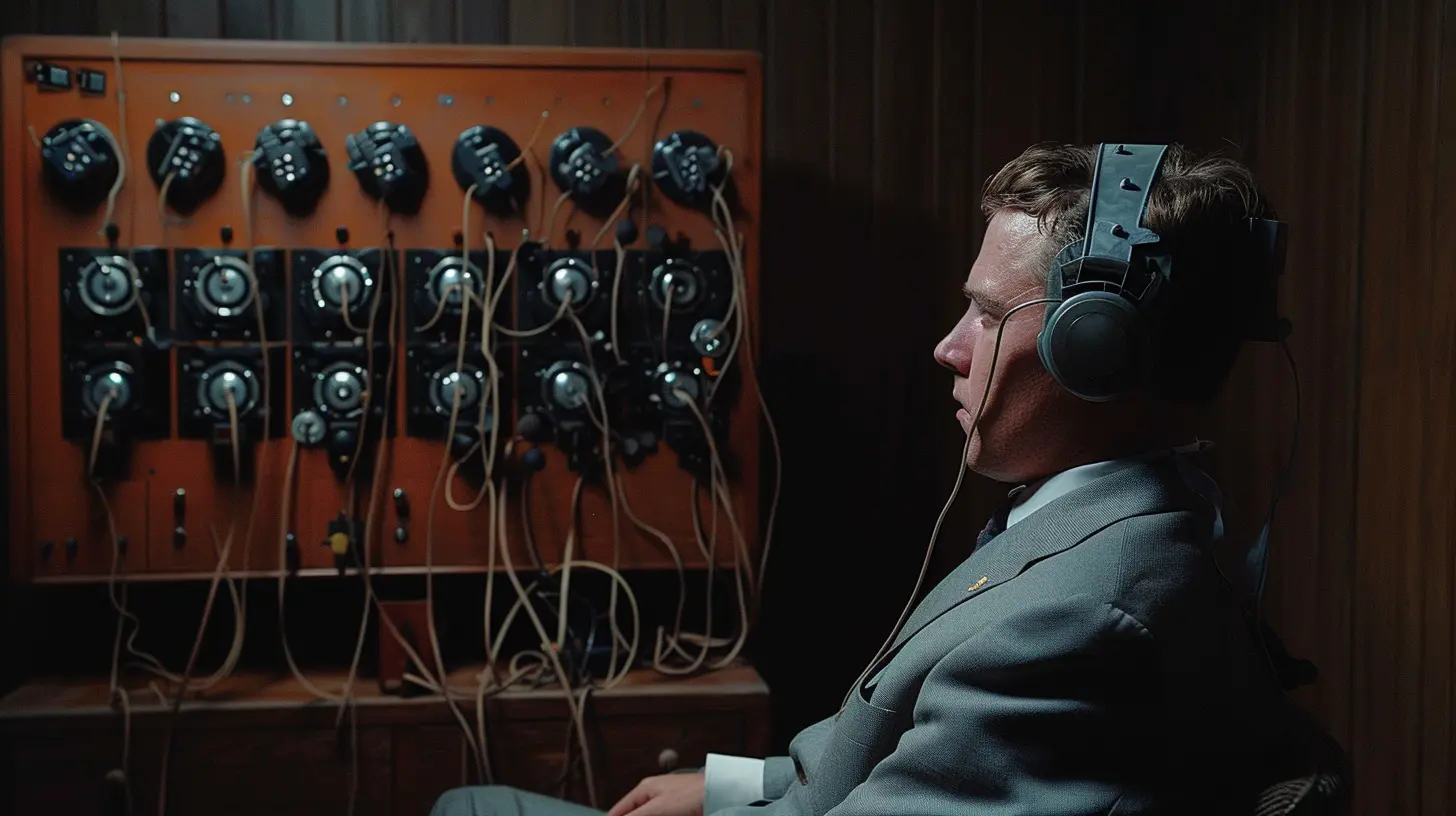
Before we get into the nitty-gritty of authority and human behavior, let’s first understand the basics of the Milgram Experiment. Picture this: it’s the early 1960s, a time when the world is grappling with the aftermath of World War II. The horrors of the Holocaust are still fresh in people's minds. How could so many ordinary people participate in such atrocities? Were they just following orders?This is precisely what Stanley Milgram, a psychologist at Yale University, wanted to uncover. He designed an experiment to test the limits of obedience to authority.
The Setup
Participants in Milgram’s study were told they were part of a learning experiment. They were introduced to another individual, who they believed was another participant (in reality, this person was an actor or "confederate"). The real participant was assigned the role of a "teacher," while the actor was designated as the "learner."The teacher’s job was to administer an electric shock to the learner every time they answered a question incorrectly. The shocks started small but increased in intensity with each wrong answer. Unbeknownst to the teacher, the electric shocks weren’t real, and the learner was only pretending to be in pain.
A researcher, dressed in a lab coat—symbolizing authority—stood by and urged the teacher to continue administering shocks, even as the learner screamed, begged for mercy, or eventually went silent (implying they had passed out or worse).
The Shocking Results
The real kicker? Most participants, despite hearing the learner’s cries of agony, continued to administer shocks simply because the authority figure (the researcher in the lab coat) told them to. In fact, a whopping 65% of participants went all the way to the highest voltage (450 volts), potentially lethal shocks.This outcome left many people, including Milgram himself, stunned. It raised difficult questions about human nature, morality, and the power of authority.

Why Did People Obey?
So, why did so many participants in the Milgram Experiment obey, even when they clearly believed they were causing harm to another person? The answer lies in the complex relationship between authority and human behavior.1. Authority Figures Hold Power
Let’s face it: humans are social creatures. From an early age, we’re taught to respect authority—whether that’s our parents, teachers, or government officials. There’s a certain comfort in following orders, especially when they come from someone perceived as knowledgeable or in control.In the Milgram Experiment, the researcher symbolized authority. Dressed in a lab coat and operating in a prestigious university setting, the researcher’s presence alone was enough to make participants feel obligated to comply. The idea of "just following orders" becomes ingrained in our psyche, often overriding our personal sense of right and wrong.
2. Diffusion of Responsibility
Here’s a tricky psychological concept: diffusion of responsibility. In group settings or hierarchical structures, individuals may feel less accountable for their actions. They believe that the responsibility lies with the person giving the orders, not with themselves.In Milgram's study, participants were told that the researcher would take full responsibility for any harm caused to the learner. This relieved participants of guilt, making it easier for them to continue administering shocks, even when their conscience was screaming at them to stop.
3. Gradual Escalation
The escalation in the Milgram experiment was gradual. Participants didn’t start by administering the highest shock. Instead, they began with small, seemingly harmless shocks. As the voltage increased, each step felt like a minor escalation from the previous one, making it easier to justify their actions.Think of it like boiling a frog (not that anyone should, of course!). If you toss a frog into boiling water, it’ll jump out immediately. But if you slowly raise the temperature, the frog won’t notice until it’s too late. Similarly, the slow but steady increase in shock levels made it harder for participants to stop and question their actions.
What Does the Milgram Experiment Teach Us?
The Milgram Experiment has a lot to say about human nature. Let’s break down the key lessons we can take away.1. People Can Be Alarmingly Obedient
Perhaps the most uncomfortable takeaway is the extent to which people will follow orders, even when those orders conflict with their moral compass. The majority of participants in Milgram’s study were willing to go to extreme lengths—even potentially killing someone—because an authority figure told them to.This isn’t just limited to Milgram’s lab. History is filled with examples of people committing atrocities because they were "just following orders," from soldiers in war to employees in unethical corporations.
2. Authority Can Be Abused
Milgram’s study also underscores the potential dangers of authority. When someone in a position of power gives an order, people are more likely to follow without questioning whether it’s right or wrong. This makes it all too easy for authority to be abused, as individuals may carry out heinous acts simply because they feel they have no choice.It’s a reminder that we should always question the motives and ethics of those in power. Blind obedience can lead to disastrous consequences.
3. We Are All Susceptible
One of the most striking aspects of the Milgram Experiment is that ordinary individuals—people like you and me—were the ones administering the shocks. These weren’t sadists or psychopaths. They were regular folks, many of whom were visibly distressed by what they were doing but continued anyway.This suggests that under the right conditions, most of us are capable of actions we’d never think ourselves capable of. It’s a humbling and somewhat frightening realization.

The Modern Relevance of Milgram's Findings
It’s easy to look back at the Milgram Experiment and think, "I would never do that." But the truth is, the dynamics of authority and obedience are still very much at play in today’s world.1. Workplace Dynamics
Think about the workplace. How many times have you gone along with a manager’s decision, even if you didn’t entirely agree with it? Maybe you’ve seen unethical practices but didn’t speak up because you didn’t want to rock the boat.The Milgram Experiment shows us that in hierarchical settings, people are often more willing to follow orders, even when they feel uneasy about them.
2. Social Media and Authority
In the digital age, authority isn’t just about people in lab coats or government officials. Influencers, celebrities, and even online personalities can wield significant power over their followers. People may blindly follow advice or trends simply because someone they admire or perceive as an authority figure endorses them.From dangerous TikTok challenges to misinformation spreading like wildfire, the influence of perceived authority figures on social media can have real-world consequences.
3. Political and Military Obedience
The Milgram Experiment is particularly relevant in political and military contexts. Throughout history, soldiers and citizens alike have justified horrific actions by claiming they were simply following orders. Milgram’s findings remind us of the need for checks and balances in systems of authority to prevent abuse and unchecked obedience.How Can We Resist Blind Obedience?
It’s not all doom and gloom, though! The Milgram Experiment also provides valuable insights into how we can resist blind obedience and make more conscious, ethical decisions.1. Question Authority: It’s important to ask questions when someone in authority tells you to do something that feels wrong. Don’t be afraid to challenge decisions or seek clarification.
2. Trust Your Instincts: If something feels off, trust your gut. Your internal moral compass is often a good indicator of whether an action is ethical or not.
3. Take Responsibility: Don’t fall into the trap of diffusion of responsibility. Remember that you are accountable for your actions, even if someone else is giving the orders.
4. Seek Support: If you’re in a situation where you feel pressured to obey unethical commands, seek out support from friends, colleagues, or mentors who can help you navigate the situation.
Final Thoughts
The Milgram Experiment was a groundbreaking study that revealed the unsettling extent of human obedience to authority. While it’s uncomfortable to acknowledge, the experiment shows that under certain conditions, many of us are capable of actions that go against our morals.But this doesn’t mean we’re powerless. By staying aware of the influence authority can have on our behavior, questioning orders that feel wrong, and taking personal responsibility for our actions, we can resist blind obedience and make ethical choices.
So the next time you're faced with an order or directive, whether from a boss, a teacher, or an influencer, take a moment to reflect. Are you acting because it's right, or simply because someone told you to?
all images in this post were generated using AI tools
Category:
Human BehaviorAuthor:

Christine Carter
Discussion
rate this article
2 comments
Galina Diaz
The Milgram Experiment highlights the profound impact of authority figures on individual behavior, revealing the potential for ordinary people to engage in unethical actions under pressure. Understanding this can inform ethical decision-making in various contexts.
December 31, 2025 at 5:15 AM
Christine Carter
Thank you for your insightful comment! The Milgram Experiment indeed underscores the significant role authority plays in shaping behavior, emphasizing the importance of ethical awareness in all contexts.
Maribel McClain
This article effectively highlights the profound impact of authority on human behavior, as demonstrated by the Milgram Experiment. It serves as a crucial reminder of the ethical considerations in psychology and the need for awareness regarding obedience and personal responsibility. A thought-provoking read that encourages reflection on our own behaviors.
December 28, 2025 at 3:46 AM
Christine Carter
Thank you for your thoughtful comment! I'm glad you found the article thought-provoking and that it sparked reflection on such important ethical considerations.