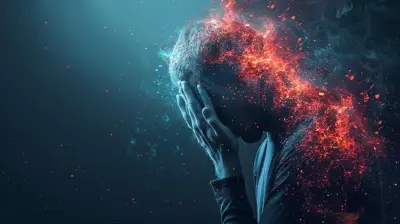
The Future of Holistic Mental Health: What to Expect by 2026
18 April 2026
Let’s be honest for a second. When you think about mental health care, what comes to mind? Is it a sterile office, a 50-minute session, and a prescription pad? For decades, that’s been the dominant picture. But something profound is shifting. It’s as if we’ve been trying to understand a symphony by listening to only the violin section. We’re finally realizing that mental well-being isn’t a single note; it’s the entire orchestra of our being—mind, body, spirit, community, and environment—playing in harmony. This is holistic mental health, and its future is arriving faster than you might think.
By 2026, the landscape of how we understand, approach, and heal our minds will look fundamentally different. It’s moving from a model of reaction to one of integration. We’re not just fixing what’s broken; we’re building systems that foster enduring wellness. So, what can we actually expect? Let’s pull back the curtain.

From Symptom Management to Root Cause Resolution
For too long, mainstream mental health care has often been like putting a band-aid on a leaky pipe. The band-aid (often medication and short-term therapy) might stem the immediate flood, but it doesn’t stop the corrosion causing the leak. The future is all about finding that corrosion.By 2026, expect your first visit to a mental health professional to feel more like a detective’s briefing than a checklist of symptoms. Practitioners will be trained to look at a constellation of factors:
* The Gut-Brain Axis: We’ll see routine screening for gut health. Why? Because your gut microbiome produces about 90% of your body's serotonin. An unhappy gut often means an unhappy mind. Nutritional psychiatry will be a standard part of treatment plans.
* Inflammation & The Body: Chronic, low-grade inflammation is now linked to depression and anxiety. Blood tests for inflammatory markers like CRP could become as common as discussing your mood.
* Hormonal Symphony: Thyroid function, sex hormones, cortisol rhythms—these aren't just for endocrinologists anymore. A hormonal imbalance can masquerade as anxiety or depressive fatigue, and addressing it can be transformative.
* Environmental & Social Determinants: Where you live, the air you breathe, your financial stability, your sense of belonging—these aren't sidebar conversations. They will be central to the diagnostic picture.
The goal? To move from saying “You have depression, here’s an SSRI” to “Your body is in a state of high inflammation, your gut flora is depleted from stress and diet, and your circadian rhythm is disrupted, which is manifesting as depressive symptoms. Let’s build a plan that addresses all of that.”
Technology as a Compassionate Connector, Not a Cold Replacement
Ah, technology. It’s often blamed for our modern anxieties, right? But by 2026, it will have firmly cemented its role as a powerful ally in holistic care. Think of it not as a robot therapist, but as a set of sophisticated tools that extend care into the fabric of your daily life. Wearables That Actually* Understand You: Your smartwatch in 2026 won’t just count steps. It will analyze heart rate variability (a key marker of nervous system resilience), track sleep architecture in detail, and even predict mood dips based on physiological data. It will nudge you: “Your data suggests high stress. A 10-minute walk in sunlight now could help reset your system.”
* AI-Powered Personalization: Imagine an app that learns your unique patterns. It synthesizes data from your wearable, your food logs, and your mood journal (voice-recorded, because who has time to type?) and offers tailored insights: “You consistently report higher energy on days you have a protein-rich breakfast and a 20-minute afternoon walk. Let’s schedule that.”
* VR for Exposure & Empathy: Virtual Reality will move beyond gaming. It will be used for safe, controlled exposure therapy for phobias and PTSD. But more beautifully, it will be used for empathy training and social connection, allowing someone with severe social anxiety to practice conversations in a simulated, safe space.
* Teletherapy as a Gateway, Not a Compromise: The pandemic opened the door; by 2026, it’s a main entrance. This democratizes access, allowing you to connect with a specialist in nutritional psychiatry or mindfulness-based stress reduction, regardless of geography.
The key is that this tech won’t be isolating. It will be designed to connect you back to your body, your practitioner, and your community.

The Ascendance of Preventative & Lifestyle Psychiatry
The most exciting shift is the move from a sick-care system to a true health-care system. By 2026, "mental health check-ups" will be as normalized as dental cleanings. We’ll stop waiting for the crisis.Lifestyle prescriptions will be as legitimate as pharmaceutical ones. Your therapist or coach might “prescribe”:
* Nature Pill: Specific, evidence-based recommendations for time in green or blue spaces.
* Movement as Medicine: Not just “exercise more,” but guidance on the type of movement your nervous system needs—soothing yoga, energizing dance, or strength-building resistance training.
* Digital Hygiene Plans: Structured protocols to manage screen time, social media consumption, and the constant drip of information.
* Community Connection Scripts: Literal scripts or guided steps to help you build or deepen social ties, combatting the epidemic of loneliness.
Workplaces and schools will be held to a new standard. Mental well-being initiatives will evolve from tokenistic pizza parties to embedded structural support: mandatory meeting-free blocks, designated quiet rooms, and training managers in psychological safety.
Decentralization and the Power of Community
The therapist’s office will no longer be the sole temple of healing. Healing will be recognized as a community-powered endeavor. We’ll see the rise of:* Peer Support Networks: Formally integrated into care plans. Connecting with someone who has walked a similar path can be as therapeutic as formal therapy for many.
* Group-Based Healing Modalities: From trauma-informed yoga circles to men’s mental health groups and art therapy collectives. Healing in a circle reminds us we are not alone in our struggles.
* Integrative Wellness Hubs: These might be physical spaces or virtual communities that offer a one-stop shop: a therapist, a nutritionist, a massage therapist, a meditation guide, and a social worker, all working under a shared, holistic philosophy.
This decentralizes expertise and empowers individuals. It says, “Your healing journey is yours to lead, and here is a village of support to help you.”
The Challenges on the Horizon: Navigating the New Frontier
This future isn’t a utopia without bumps. As we sprint toward 2026, we must navigate some tricky terrain:* The Equity Gap: All this tech and personalized care costs money. We must fight to ensure these advances don’t create a wider chasm between the mental health “haves” and “have-nots.” Insurance coverage for holistic modalities is a critical battleground.
* Data Privacy & Ethics: Our mental health data is the most sensitive data there is. Who owns your mood-prediction algorithm? How is that data protected? Robust ethical frameworks need to be built, and fast.
* Integration & Skepticism: Getting the traditional medical establishment and holistic practitioners to speak the same language is a hurdle. We need to build bridges, not silos, fostering collaboration between psychiatrists, therapists, nutritionists, and community healers.
* The "Quick Fix" Temptation: In our rush to embrace the new, we must guard against the promise of a silver bullet. True holistic health is a slow, committed practice, not an app download. The market will be flooded with solutions; our wisdom will lie in discerning what truly serves deep healing.
Conclusion: A More Human Future Awaits
So, what does the future of holistic mental health by 2026 truly promise? It promises a return to a more complete, more compassionate view of what it means to be human. It’s a future where your therapist asks about your diet and your social circle, where your doctor prescribes a forest bath alongside a medication, and where technology serves not to distract you from yourself, but to help you listen to yourself more deeply.It’s a future that acknowledges that you are not a brain in a jar. You are a being whose thoughts are woven from the threads of your biology, your relationships, your environment, and your spirit. By 2026, the mental health field won’t just be treating disorders; it will be actively, systemically, and lovingly cultivating the conditions for human flourishing. And that’s a future worth stepping into, together.
all images in this post were generated using AI tools
Category:
Holistic Mental HealthAuthor:

Christine Carter
Discussion
rate this article
1 comments
Raegan Pacheco
2026: Even our thoughts will need a spa day! Relaxation mandatory!
April 27, 2026 at 3:31 AM
Christine Carter
Absolutely! Mental wellness will be crucial, and taking time to recharge will become a priority for everyone.