The Connection Between Cognitive Dissonance and Political Polarization
25 August 2026
Ever get into a heated political debate and walk away feeling more convinced of your own views, even if you heard some pretty solid arguments from the other side? Yeah, you're not alone. That frustrating mental tug-of-war you feel when someone's opinions clash with your own might have a name: cognitive dissonance. And when it comes to politics today? Oh boy, it's like gasoline on a fire.
Let’s dive deep (but keep it fun and understandable) into how cognitive dissonance—our brain's way of dealing with internal conflict—might be fanning the flames of political polarization. Don’t worry, we’ll keep the psychology jargon on a leash.
What Is Cognitive Dissonance, Really?
Let’s start with the basics. Cognitive dissonance is that uncomfortable mental tension we experience when we hold two contradicting beliefs or when our actions don’t match our values.Imagine this: You're all about healthy living. You preach about clean eating, hit the gym five times a week, but then—you find yourself inhaling a double cheeseburger at midnight. That guilty, uneasy feeling? Boom. Cognitive dissonance. Your brain doesn't like it when your actions contradict your beliefs. So, what does it do? It starts looking for ways to fix it. Maybe you convince yourself it was a “cheat day,” or that you deserved it after that intense workout. See? That’s mental gymnastics at work.
Now, apply this to political beliefs, and things get messy real fast.
Politics: The New Tribalism
Politics used to be about parties and policies. Now? It feels more like picking a sports team and sticking with it no matter what. “My side can do no wrong” versus “Your side is the devil.” Sound familiar?This isn't just loyalty—this is identity. People don't just say, “I'm a Democrat” or “I'm a Republican.” It becomes “This is who I am.” And when that identity is challenged? Cue the cognitive dissonance.
Imagine someone shows you clear evidence that your chosen political leader was wrong about something important. Instead of going, “Wow, I didn’t know that,” chances are your brain will say, “Nah, there's no way that’s true,” or “They were taken out of context.” Why? Because accepting the truth would mean admitting your belief might be flawed. And that stings.
How Does Cognitive Dissonance Fuel Political Polarization?
1. We Avoid Information That Challenges Us
Ever hear of the phrase “echo chamber”? It’s when we surround ourselves with information that only confirms what we already believe. Social media? Yep, it's a giant echo chamber.Thanks to algorithms designed to show us more of what we like, we end up seeing the same opinions over and over. And when something pops up that doesn’t match our views? Scroll. Ignore. Block. Unfollow. Classic cognitive dissonance avoidance.
We like comfort. And challenging our beliefs? That’s uncomfortable. So we stick to our own corner of the internet, and polarization gets worse.
2. We Rationalize Contradictions
Let’s say a politician you support flips their stance on a big issue. Instead of questioning them, you might find yourself saying, “Well, they had legit reasons,” or “They’re just being strategic.”Meanwhile, someone from the other party does it? “What a hypocrite!”
That’s cognitive dissonance doing its thing. Instead of adjusting your belief, your brain works overtime to defend your position. It’s like emotional duct tape, patching over mental cracks just so you don’t have to question yourself.
3. Dissonance Makes Us Double Down
Here’s the kicker: when confronted with conflicting information, instead of changing our views, we often grip them tighter. This is called the “backfire effect,” and it's wild.Why does it happen? Because admitting you're wrong feels like losing a little piece of yourself. So, when someone challenges your beliefs, your brain goes, “Nope, not today” and throws up mental defenses like a fortress.
The result? Even more division. More “us vs. them.” More polarization.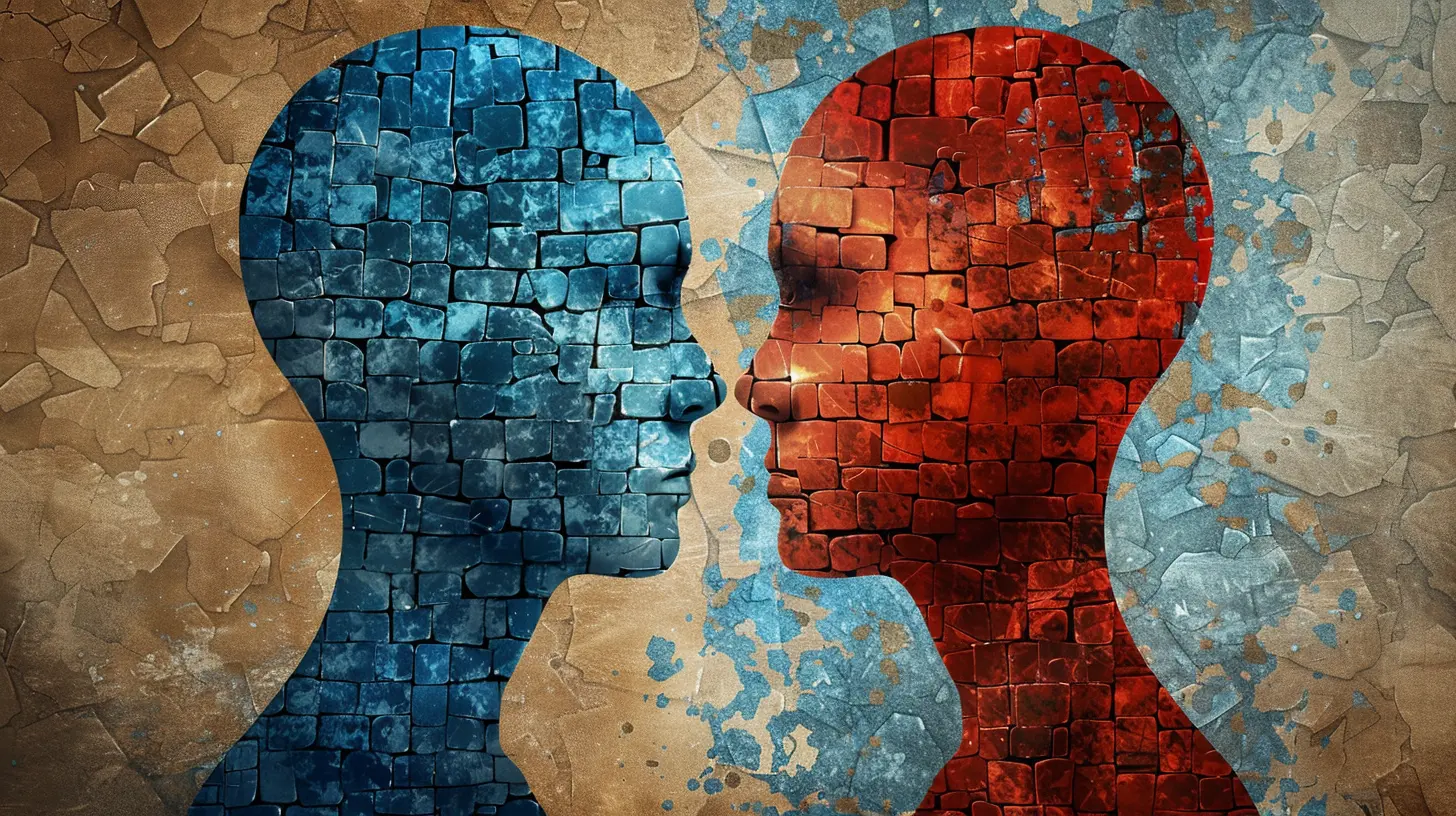
The Role of Emotions in the Mix
Let’s be real—politics isn't just about facts. It’s deeply emotional. We care about things like justice, freedom, security, and fairness. So when someone criticizes your political beliefs, it can feel personal—as if they’re questioning your core values.This emotional weight makes cognitive dissonance even more intense. You’re not just defending ideas—you’re defending your identity, your values, your tribe.
And when emotions take the wheel? Facts often get tossed in the back seat.
Media and Echo Chambers: Stirring the Pot
Remember those cozy echo chambers we talked about? The media plays a massive role here. News outlets, talk shows, influencers—they all know one thing: outrage sells. Outrage keeps people clicking, commenting, and sharing.So what do they do? They frame stories in a way that confirms your worst fears about the other side. They serve up content that triggers your emotions and strengthens your existing beliefs.
All this does is feed your cognitive dissonance. If someone tries to show you “the truth” from the other side, it doesn’t matter. Your brain has already made up a story to protect itself.
Is There Any Way Out of This?
OK, all this might sound a bit bleak. But hold up—we're not doomed.Here are a few things we can do to fight back against cognitive dissonance and reduce polarization (yep, it’s possible!).
1. Get Comfortable Being Uncomfortable
This is a tough one. But seriously, growth doesn’t happen in your comfort zone. Try exposing yourself to opposing viewpoints—not to fight them, but to understand them.Ask yourself: “Why might someone believe this?” instead of “How fast can I prove them wrong?”
Your brain might resist at first (hello, dissonance), but over time, it gets easier. Like a mental workout.
2. Focus on Common Ground
A lot of what divides us is exaggerated. At the core, many of us want the same things: safety, fairness, opportunity.Sometimes, the way we talk about issues creates more division than the issues themselves. Try looking for values beneath the opinions. You might be surprised how much overlap there actually is.
3. Practice Intellectual Humility
Nobody has all the answers—not you, not me, not even your favorite political pundit. And that’s okay.Admitting you might be wrong doesn’t make you weak. It makes you wise. Honestly, that kind of honesty is rare and powerful in today’s world. Be the exception.
4. Slow Down Online Reactions
Before you hit “share” or fire off that angry tweet, take a breath. Ask: Is this true? Is this helpful? Or is it just feeding my existing beliefs and attacking someone else’s?You’d be amazed how much clearer things get when you pause for just a second.
Cognitive Dissonance Isn’t Always Bad
Here’s a twist: cognitive dissonance, when used right, can actually push us toward growth.That discomfort you feel? It’s your brain’s way of saying, “Hey, something doesn’t add up. Maybe we should think this through?” It’s an invitation to reflect, not react.
So don’t ignore that tension. Lean into it. Let it challenge you. Use it as a tool rather than a trap.
Final Thoughts
Look, we’re all human. We’ve all defended beliefs without fully understanding them. We’ve all clung to opinions that made us feel safe. But if we want to break free from the cycle of political polarization, we’ve got to start with our own minds.Cognitive dissonance isn’t something to fear—it’s something to understand. The more we get comfortable with that internal discomfort, the more open we become. And in a world that desperately needs more empathy, curiosity, and connection, that’s a pretty powerful thing.
So next time you feel defensive during a political conversation, ask yourself: Is my brain protecting me—or is it stopping me from learning something new?
That tiny question might just make a big difference.
all images in this post were generated using AI tools
Category:
Cognitive DissonanceAuthor:

Christine Carter
Discussion
rate this article
1 comments
Sandra McPhail
Cognitive dissonance fuels deep political divides.
August 29, 2026 at 3:39 AM
Christine Carter
You're right. Cognitive dissonance often leads people to cling to their beliefs more firmly, deepening political divides. It's a complex challenge we face in today's society.