Social Media Addiction and Its Psychological Impact
25 October 2026
Social media has become a near-constant presence in modern life. It shapes how people communicate, form relationships, consume news, and even how they perceive themselves. For most users, these platforms are tools that serve a purpose: staying in touch, sharing milestones, or finding information. For a meaningful minority, however, the relationship becomes something closer to a compulsion, one that quietly erodes attention, mood, and self-worth. This article examines social media addiction as a psychological phenomenon, not as a moral failing or a generational cliché. It looks at what distinguishes problematic use from ordinary engagement, why the brain is vulnerable to these platforms, what the consequences look like in real life, and what actually helps.
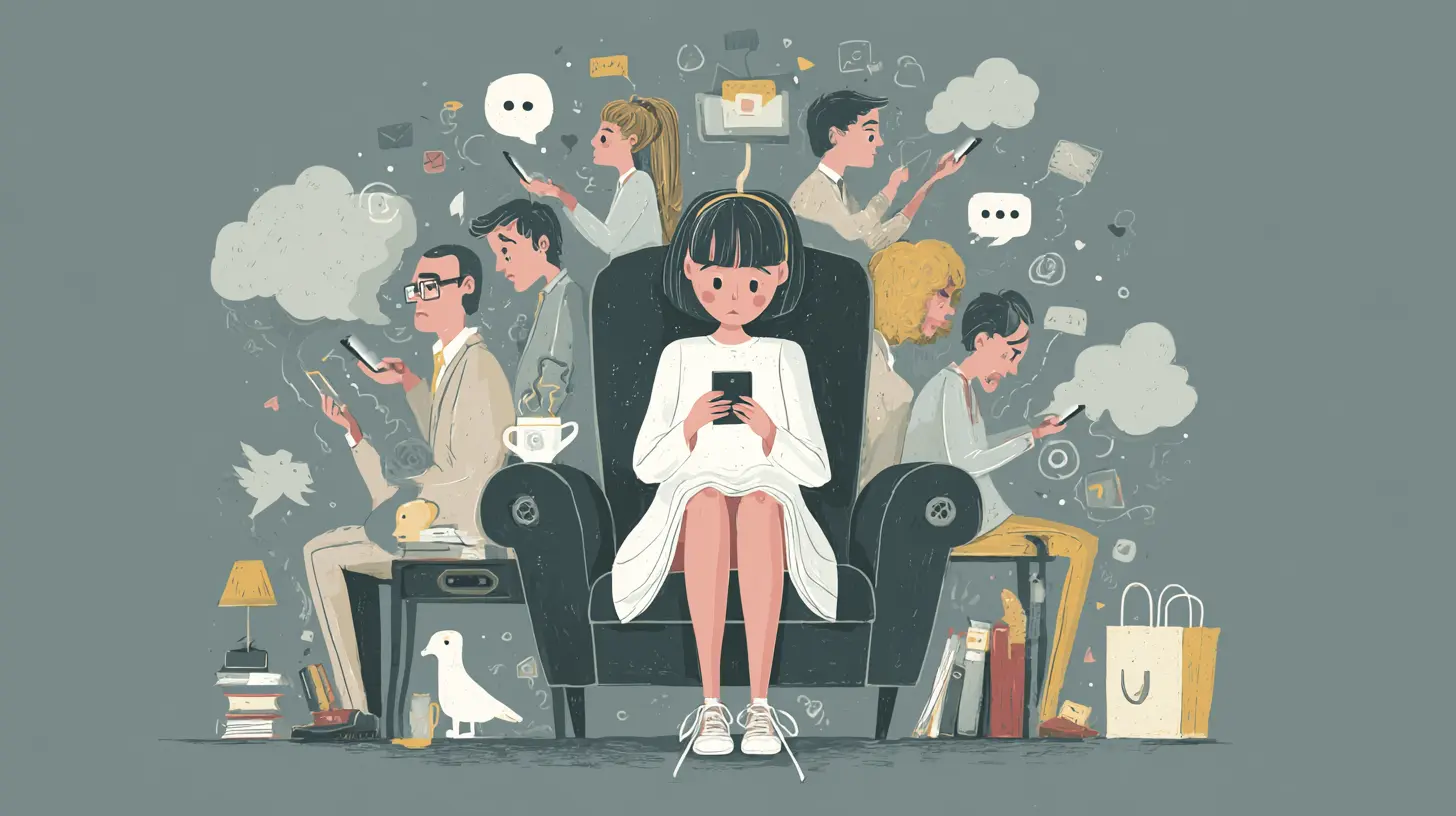
What Social Media Addiction Actually Is
The term "addiction" carries weight, and it is worth being precise. Clinical manuals do not yet list social media addiction as a formal diagnosis, though problematic use is recognized in research and in some clinical frameworks as a behavioral pattern worth attention. The most useful way to understand it is through the lens of behavioral addiction: a compulsion to engage in an activity despite negative consequences, with difficulty controlling the behavior and signs of withdrawal or irritability when it is unavailable.This definition matters because it separates addiction from heavy use. A person can spend two hours a day on social media for work and connection without any harm. Another person might spend the same two hours scrolling compulsively, feeling worse afterward, sleeping poorly, and repeatedly failing to cut back. The difference is not the clock. It is the loss of control and the presence of harm.
Three features tend to mark problematic use:
- Preoccupation. Thoughts drift toward the platform during other activities. The phone is checked before anything else in the morning.
- Impaired control. Attempts to limit use fail repeatedly, often within days.
- Continued use despite harm. Sleep, study, work, or relationships suffer, yet the behavior continues or intensifies.
When these features cluster and persist over months, the pattern resembles other behavioral addictions closely enough that the same psychological principles apply.
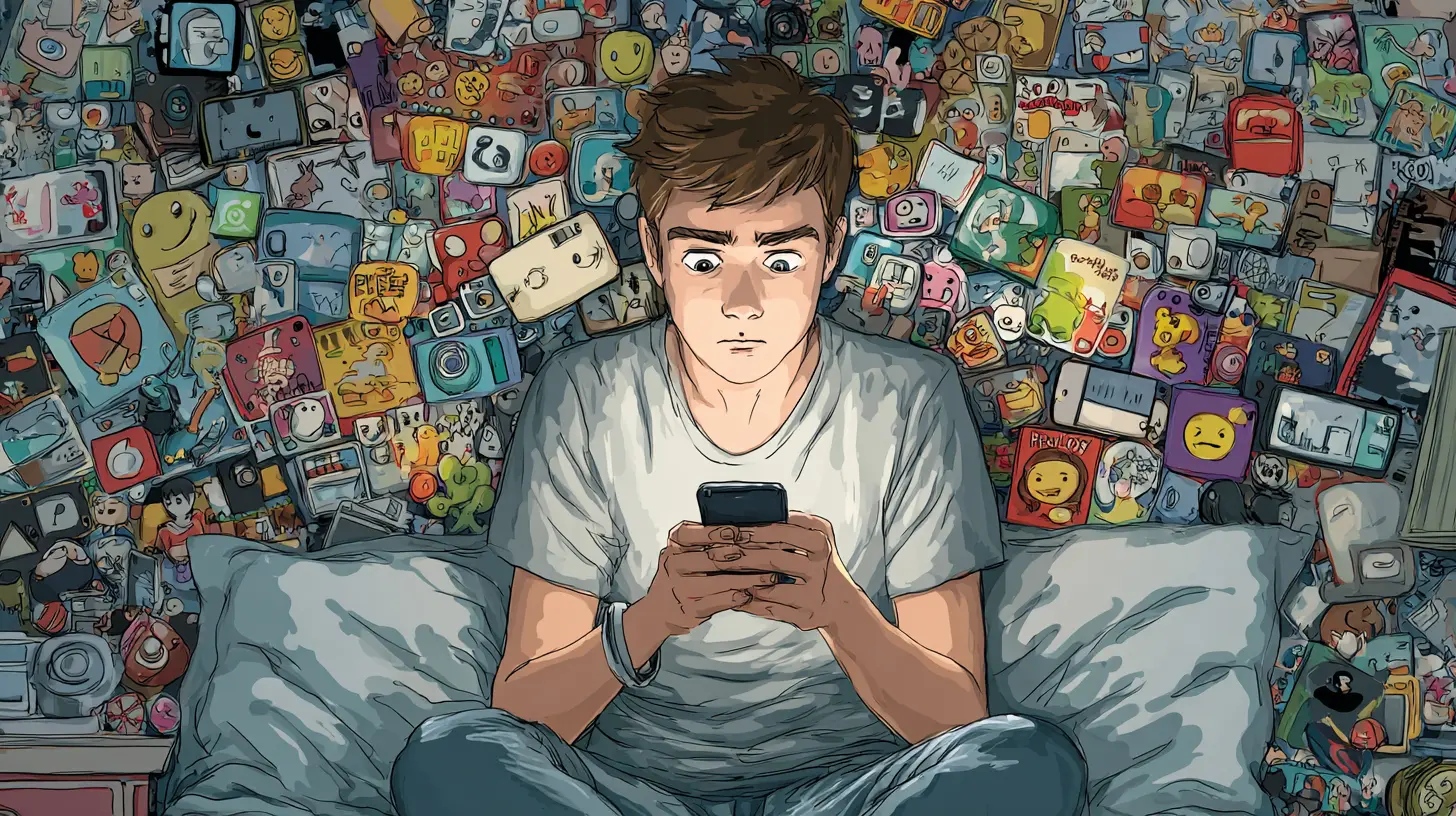
Why the Brain Is Vulnerable
Social media platforms are not neutral environments. They are engineered systems, and much of that engineering targets the brain's reward circuitry. Understanding this is not about blaming users. It is about recognizing that willpower is being asked to compete against design built by teams of specialists.Variable reward schedules
The most powerful reinforcement schedule in behavioral psychology is the variable ratio schedule: rewards arrive unpredictably, on average after some number of actions. Slot machines use it. So do social feeds. A post might get three likes or thirty. A video might be dull or mesmerizing. That uncertainty is precisely what keeps a person checking. Predictable rewards lose their pull quickly. Unpredictable ones sustain engagement far longer.The dopamine question, clarified
It is common to say social media causes a "dopamine hit." The neuroscience is more nuanced. Dopamine is better understood as a signal for anticipation and learning than for pleasure itself. Scrolling does not flood the brain with pleasure. It creates a state of seeking, a low-grade anticipation that something rewarding might appear next. That seeking state is what makes stopping feel uncomfortable. The discomfort is not dramatic. It is a subtle itch that the next swipe promises to scratch.Social validation as a primary need
Humans are deeply social animals. Belonging and status are not luxuries; they are survival-relevant signals. Social media converts these ancient needs into quantifiable metrics: followers, likes, views. The brain treats social feedback with real seriousness, which is why a critical comment can sting for hours and why a post that underperforms can feel like a small rejection. The platform did not create the need. It industrialized the feedback loop.
The Psychological Consequences
The effects of problematic use are broad, and they interact with each other. A sleep problem worsens mood, poor mood drives more scrolling, and more scrolling worsens sleep. The cycle is the point.Mood and anxiety
Heavy, compulsive use is consistently associated in research with elevated symptoms of anxiety and low mood, though causation runs in both directions. People who feel low often reach for social media as relief, and the relief is short-lived. Comparison with curated versions of other lives tends to leave users feeling behind. The effect is strongest when use is passive: scrolling without posting or interacting. Passive consumption invites comparison. Active interaction, such as messaging a friend directly, tends to feel different and often more positive.Body image and self-evaluation
Platforms centered on images amplify appearance comparison, and the effect falls disproportionately on adolescents and young adults. Filters and editing tools blur the line between presentation and reality, and repeated exposure to idealized images can recalibrate what feels normal. This is not vanity. It is a documented shift in self-perception, and it is one reason adolescence, a period when identity is still forming, is a particularly sensitive window.Attention and cognitive load
Frequent switching between tasks carries a cost. Each check of a feed requires reorienting attention when returning to work or conversation. Over a day, these micro-interruptions accumulate into a sense of fragmented focus. Many heavy users describe difficulty reading long texts or sitting through a film without reaching for the phone. The capacity for sustained attention is trainable, which means it is also degradable.Sleep disruption
Late-night use delays sleep and exposes the brain to stimulating content at exactly the wrong time. Blue light is part of the story, but the bigger factor is arousal: an engaging feed keeps the mind alert when it should be winding down. Poor sleep then amplifies every other symptom, from irritability to poor concentration.Loneliness paradox
One of the stranger findings in this area is that heavy social media use can coexist with, and even deepen, loneliness. The platforms promise connection, but shallow interactions do not satisfy the need for genuine relatedness. Replacing an hour of face-to-face conversation with an hour of scrolling leaves the social need unmet while consuming the time that might have met it.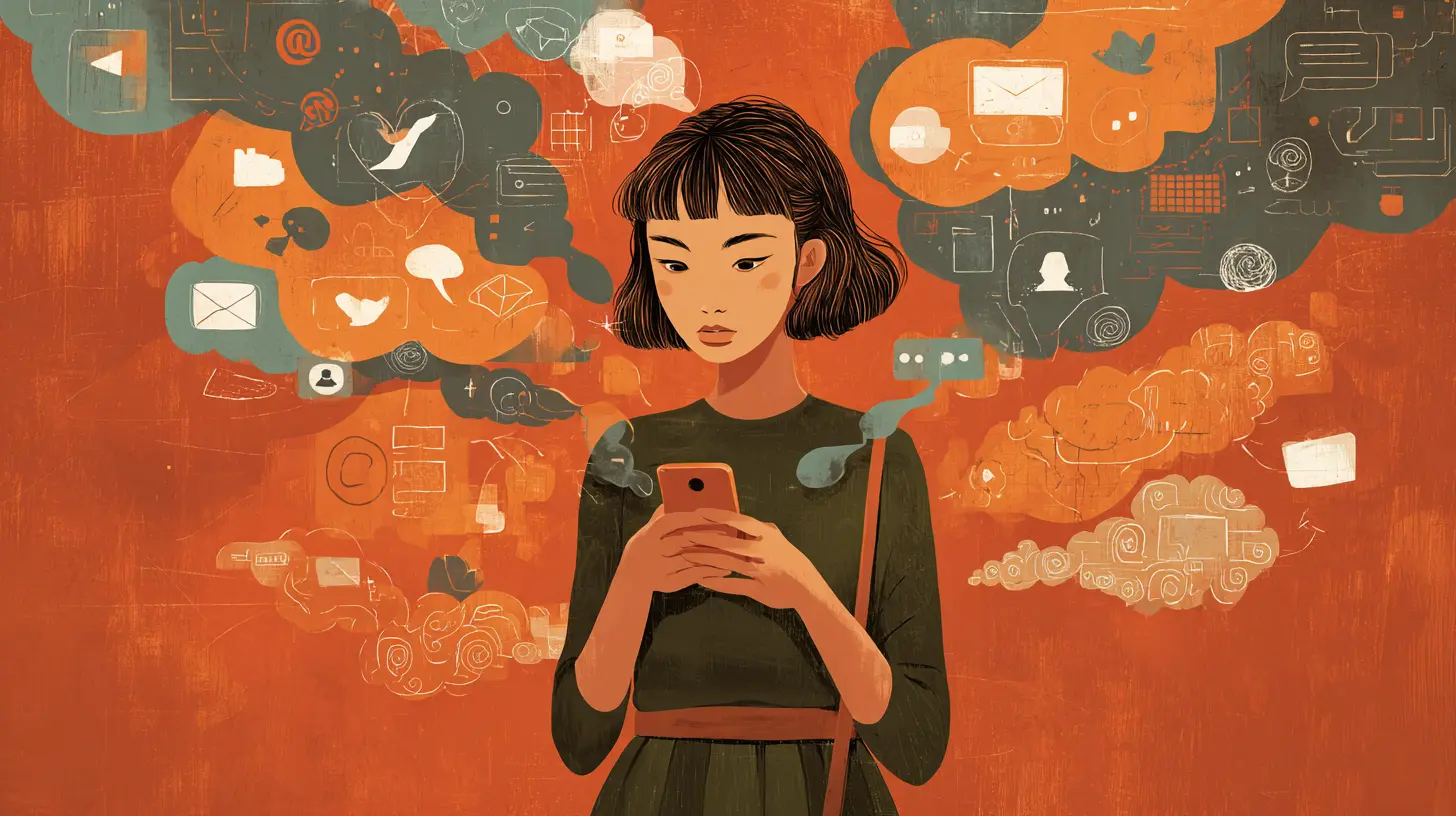
How to Tell the Difference Between Habit and Problem
Self-assessment is notoriously unreliable here, because the behavior itself distorts perspective. A few practical markers are more useful than a gut feeling:- The displacement test. What is social media pushing out? Sleep, exercise, study, meals with family, hobbies. If the answer is "nothing important," use may be heavy but not harmful.
- The control test. Can you take a 48-hour break without significant distress? If the attempt produces restlessness, irritability, or obsessive planning about returning, that is informative.
- The function test. Is the platform serving a purpose you chose, or are you opening it automatically, before deciding to? Automaticity is the hallmark of habit moving toward compulsion.
- The aftermath test. How do you feel in the ten minutes after use? Refreshed and connected, or drained and vaguely dissatisfied? The aftermath is often a clearer signal than the experience itself.
None of these tests is diagnostic on its own. Together they give a realistic picture that a single question cannot.
What Actually Helps
Advice in this area tends to fall into two camps: abstinence and moderation. Both have merit, and the right choice depends on the person and the context.Abstinence and digital detoxes
Full breaks are powerful for one reason: they interrupt the automatic loop and reveal how much of the behavior was driven by cue rather than choice. A week away from a platform often produces a surprising realization that the feared withdrawal was milder than expected. The limitation is durability. Most people return, and without changes to the environment, old patterns reassert themselves quickly. A detox is best used as a diagnostic and a reset, not as a permanent solution.Moderation and environmental design
For most people, sustainable change comes from redesigning the environment rather than relying on self-control in the moment. Self-control is a poor match for engineered persuasion, but environment design changes the game:- Remove the cue. Log out after each session, delete apps from the phone while keeping browser access, or move the app off the home screen. Friction matters more than intention.
- Set structural limits. Scheduled windows for use, phone-free bedrooms, and device-free meals work because they remove the decision from the moment of temptation.
- Turn off non-essential notifications. Every push notification is an interruption the platform initiated. Reclaiming that channel is one of the highest-leverage changes available.
- Replace, do not just subtract. A vacuum gets filled by the old habit. Plan what occupies the freed time: a walk, a book, a call to a friend. Substitution is what makes reduction stick.
When to seek professional help
If use is accompanied by significant depression, anxiety, sleep disturbance, or functional impairment at work or school, a mental health professional should be involved. Problematic social media use often travels with other conditions, and treating the underlying issue is usually more effective than attacking the platform alone. Therapy approaches that address the function of the behavior, such as cognitive behavioral strategies, are commonly used and well suited to this pattern.
Common Misconceptions
Several beliefs about social media addiction are widespread and unhelpful."It is just a lack of discipline." This framing ignores design. The behavior is shaped by systems built to maximize engagement. Discipline helps, but environment design helps more.
"Only teenagers are affected." Adolescents are more vulnerable for developmental reasons, but adults are not immune. Workplace scrolling, doomscrolling, and late-night checking are common across age groups.
"Quitting entirely is the only real solution." For some people, abstinence is the right call. For many others, structured moderation preserves the genuine benefits of connection while limiting harm. There is no single correct answer, and treating abstinence as the only legitimate goal can push people away from change altogether.
"Screen time numbers tell the whole story." Total minutes are a crude measure. Twenty minutes of active messaging with close friends is psychologically different from two hours of passive scrolling. Quality and context matter more than raw duration.
A Balanced View
Social media is not uniformly harmful. It maintains relationships across distance, supports marginalized communities, enables organizing, and provides access to information that would otherwise be hard to find. The goal of this discussion is not to demonize the tools but to restore intentionality. The question worth asking is not "how much" but "what for." When use is chosen, purposeful, and bounded, it can serve genuine psychological needs. When it is automatic, unbounded, and followed by regret, it works against them.The most useful stance is curiosity rather than shame. Shame tends to drive secrecy, and secrecy tends to drive more of the behavior. Honest self-observation, a redesigned environment, and a willingness to seek help when needed are more effective than harsh self-criticism. The platforms will keep optimizing for attention. The counterweight is a deliberate, informed relationship with them, built one small structural change at a time.
all images in this post were generated using AI tools
Category:
Addiction PsychologyAuthor:

Christine Carter

