Exploring the Psychology of Selective Attention
8 October 2026
Your brain is a masterful bouncer. Every second, millions of bits of sensory data pound on the doors of your consciousness, and the vast majority get turned away without a second thought. The smell of your own shirt. The pressure of the chair against your back. The hum of the refrigerator you stopped hearing years ago. All of it is arriving at your senses right now, and almost none of it is reaching you.
That filtering system is selective attention, and it is one of the most consequential mental processes you own. It decides what you experience, what you remember, and in a very real sense, what you are. It is also wonderfully easy to fool, which is where things get fun.
This article digs into how selective attention actually works, why it fails in predictable ways, and how you can use that knowledge instead of being used by it.
What Selective Attention Actually Is
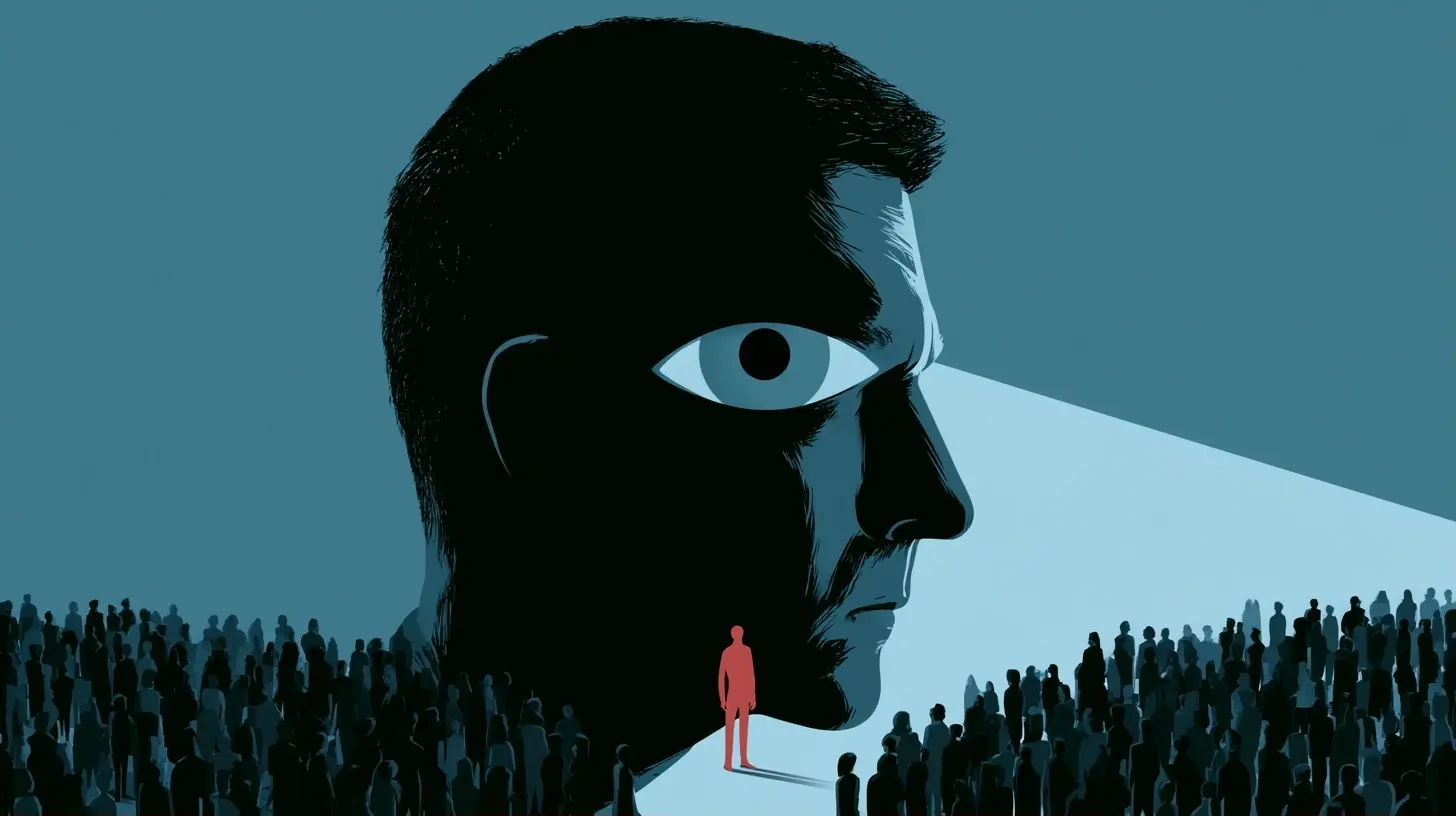
Selective attention is the cognitive process of focusing on one stream of information while suppressing others. Psychologists usually describe it as having two faces: amplification and suppression. You do not just turn up the volume on what matters. You actively turn down everything else.That second part is easy to overlook. Most people imagine attention as a spotlight. A better metaphor might be a spotlight paired with a crew of stagehands quietly removing everything the light is not touching.
This matters because the suppression side is where most of the interesting failures happen. When suppression slips, you get distraction. When it works too aggressively, you get inattentional blindness, the famous failure to notice something obvious because you were not looking for it.
The Cocktail Party Problem
In the 1950s, researchers became fascinated by a puzzle that anyone who has stood in a noisy room already knows. You are at a party. Dozens of conversations swirl around you. Somehow you can follow the one you are in, and somehow, if someone across the room says your name, you snap toward it.How can you filter out a voice and still monitor it enough to catch your own name?
This became known as the cocktail party problem, and it shaped decades of research. Early theories proposed an early filter: the brain decides what to process almost immediately, based on physical characteristics like pitch, location, or voice quality. Later work suggested the filter is more flexible, letting some unattended information through for basic semantic analysis. The debate is not fully settled, but the practical upshot is clear. Your attention is not a simple on-off switch. It is a graded, constantly negotiated set of priorities.
The Big Theoretical Split: Early vs. Late Selection
Understanding this divide will make you much harder to fool, because it explains why some distractions hit you and others do not.Early selection theory says the bottleneck happens right after sensory processing. Information gets filtered by crude physical features before meaning is even extracted. Under this model, you literally do not process the content of unattended speech. It is noise, not language.
Late selection theory says everything gets processed for meaning, and the bottleneck happens at the response stage. You understand the unattended conversation, you just do not act on it or become conscious of it.
Which is right? Probably both, depending on load. When a task is demanding, filtering happens early and aggressively. When a task is easy and you have spare capacity, more unattended information sneaks through to deeper processing.
Why This Trade-Off Matters in Daily Life
Here is the practical implication. If you are doing something cognitively heavy, your brain protects you by filtering early. That is efficient, but it also means you will miss things you might have wanted to catch.If you are doing something light, your brain lets more through. That is why you suddenly notice a distant conversation while folding laundry but not while debugging code.
The mistake people make is assuming they can choose. You mostly cannot. The filter adapts to load automatically. Your job is to manage the load, not to will the filter into a different setting.

Change Blindness and Inattentional Blindness
These two phenomena are cousins, and both are deeply humbling.Inattentional blindness is failing to see something fully visible because your attention is elsewhere. The classic demonstration involves asking people to count basketball passes and then asking whether they noticed a person in a gorilla suit walking through the scene. A substantial portion do not.
Change blindness is failing to notice a change in a scene, often across a brief interruption. A person asks you for directions, two people carrying a door pass between you, and the person you were talking to is swapped for someone else. Many people never notice.
Both arise from the same root cause. You do not perceive the world directly. You perceive a constructed model, and that model is built from a tiny sample of available data plus a lot of assumption.
The Uncomfortable Part
People consistently overestimate how much they notice. This is sometimes called the illusion of attentional completeness. It feels like you see everything because your brain fills in the gaps so smoothly. It does not feel like guessing. It feels like seeing.That illusion has real consequences. It is why eyewitness testimony is shakier than courts once assumed. It is why drivers genuinely believe they looked and did not see the cyclist. It is why you can walk past a friend in a crowd and feel terrible about it later.
The honest takeaway is not that you are oblivious. It is that attention is a sampling process, and samples miss things. Knowing that makes you slightly better at compensating, mostly by slowing down in situations where missing something is costly.
Load Theory: The Best Practical Framework
If you remember one model from this article, make it load theory. It is the most useful for everyday decisions.The core idea is simple. Attention has limited capacity. When a task consumes most of that capacity, spare capacity shrinks, and irrelevant information gets filtered out earlier and harder. When a task is easy, spare capacity is large, and irrelevant information gets processed more deeply.
This produces a counterintuitive result. Sometimes a harder task makes you less distractible, not more.
When This Helps You
Imagine you are trying to work in a noisy cafe. You have two options.Option one: do a routine task you could do half asleep. Your spare capacity is huge, so every conversation, clink of a spoon, and espresso machine hiss gets processed. You feel constantly interrupted.
Option two: do a genuinely demanding task that absorbs you. Spare capacity collapses. The noise fades. You look up two hours later wondering where the time went.
This is why people often report working better in chaotic environments than in quiet ones. It is not the chaos. It is the match between task difficulty and available capacity.
When This Backfires
The same mechanism cuts the other way. If you make a task artificially harder, say by adding background music with lyrics while reading, you consume capacity that could have gone to comprehension. You feel focused but you retain less.The rule of thumb: match the environment to the task, not to your mood. Mood says "I want music." The task says "I need silence." The task usually wins on outcomes, even when mood wins on comfort.
Why Multitasking Is Mostly a Story You Tell Yourself
True multitasking, meaning simultaneous performance of two attention-demanding tasks, is rare and usually poor. What people call multitasking is almost always rapid task switching.Switching has costs. Every time you shift, you pay a small tax in time and accuracy. Switch often enough and the taxes compound. You end up slower and more error-prone than if you had done the tasks one at a time.
The Exception Worth Knowing
Not all dual-tasking is doomed. If one task is highly automatic and does not compete for the same resources, pairing can work. Walking and talking. Listening to instrumental music while doing dishes. Folding laundry while catching up on a podcast.The key is resource overlap. Two tasks that draw on the same pool, like reading and listening to speech, will fight. Two tasks that draw on different pools, like physical routine and verbal reasoning, can coexist.
Before you decide to combine anything, ask two questions. Does either task require language or working memory? Do I care about the quality of the output? If the answer to either is yes, separate them.
The Emotional Side Nobody Talks About Enough
Selective attention is not just a cognitive filter. It is an emotional one, and this is where things get personal.You tend to notice what you fear, what you value, and what you have been primed to expect. A person with social anxiety scans for signs of rejection. A new parent hears their baby's cry in a crowded room. A chess player sees patterns a novice walks past.
This is sometimes framed as a bug. It is actually a feature with side effects. Your attentional priorities reflect your goals and concerns, which is efficient. But it also means you can get trapped in loops, noticing more of what upsets you, which reinforces the concern, which sharpens the filter.
A Practical Way Out
If you want to change what you notice, change what you practice noticing. Attention is trainable, and the training is boring but effective.Pick one thing you want to catch more often. It could be a moment of irritation before it becomes an argument. It could be a small win you usually dismiss. For a week, deliberately scan for it. You will feel clumsy. Then it will start appearing on its own.
This is not positive thinking. It is attentional retraining. The filter updates based on what you repeatedly prioritize.
Common Mistakes and Misconceptions
Let me clear up a few things that trip people up.Mistake one: believing attention is unlimited willpower. It is not willpower. It is capacity. Pushing harder does not expand the tank. Managing load does.
Mistake two: treating distraction as a character flaw. Most distraction is environmental or task-design failure. Fix the setup before blaming yourself.
Mistake three: assuming you can audit your own attention. You cannot reliably report what you missed, because missing it means you have no record of it. External checks, like checklists and second reviewers, exist for this reason.
Mistake four: confusing focus with intensity. Long, steady, low-intensity attention often beats short bursts of frantic focus. The former is sustainable. The latter burns out.
Misconception: "I am a good multitasker." Almost everyone says this. Almost everyone is wrong, and the people most confident about it tend to perform worst on measured switching tasks.
Best Practices You Can Actually Use
Here is where the theory turns into something useful.Design Your Environment Around Load
If your task is heavy, reduce competing input. Silence, closed door, phone in another room. If your task is light, you can tolerate more noise, and sometimes a bit of ambient stimulation helps you stay awake.Batch Similar Tasks
Switching between task types is expensive. Switching between similar tasks is cheaper. Group your writing, group your email, group your calls. The savings come from reusing the same mental setup.Use External Memory Aggressively
Working memory is the bottleneck for most complex work. Offload it. Write things down. Keep a visible list. Every item you hold in your head is capacity stolen from the task.Protect Transition Moments
Most errors happen at transitions, when attention is split between where you were and where you are going. Slow down at handoffs. Do a quick check before moving on.Schedule Your Hardest Work When Your Filter Is Strongest
Most people have a window of two to four hours where focus comes easily. Find yours and defend it. Do not spend it on email.When Selective Attention Should Be Trusted, and When It Should Not
Trust it for routine, low-stakes decisions where speed matters more than precision. Trust it when you are in familiar territory and the cost of a miss is small.Do not trust it for anything novel, high-stakes, or emotionally charged. Do not trust it when you are tired, because the filter gets sloppy in both directions, missing more and latching onto the wrong things.
The general principle: attention is a brilliant assistant and a terrible auditor. Let it do the work. Do not let it grade the work.
The Bottom Line
Selective attention is not a spotlight you aim. It is a negotiation between your goals, your capacity, and the world's demands. It filters ruthlessly, fills gaps with assumption, and convinces you that the result is complete reality.Understanding that changes how you work. You stop fighting your own biology and start cooperating with it. You manage load instead of willpower. You design environments instead of relying on discipline. You accept that you will miss things, and you build in checks for the things that matter most.
The gorilla is still there. Now at least you know to look.
all images in this post were generated using AI tools
Category:
Cognitive BiasesAuthor:

Christine Carter