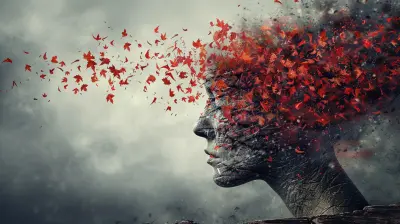
Cognitive Science and the Mystery of Consciousness
4 February 2026
Have you ever stared up at the sky, completely lost in thought, and then suddenly asked yourself, “How am I even thinking this thought?” That moment right there—that flicker of self-awareness—is at the core of one of the most puzzling and fascinating areas of study: consciousness. And it’s where cognitive science steps in, trying to piece together the inner workings of that mysterious mind of yours.
In this deep dive, we’re going to unpack how cognitive science is working to understand consciousness, why it’s so outrageously complex, and what it might mean for our future. Grab your favorite drink, get comfy, and let’s unravel the mystery.
What Is Consciousness, Anyway?
Let’s start with the million-dollar question: what exactly is consciousness? We throw around terms like “mind,” “awareness,” or “thoughts,” but the truth is, no one has nailed down a perfect definition.At its core, consciousness is your awareness of yourself and the world around you. It’s the ability to think, feel, perceive, and process sensations. It's you knowing that you’re reading this sentence right now and contemplating what it means.
But here's the kicker: we still don’t fully understand how or why this awareness exists.
Enter Cognitive Science
Cognitive science is like a mental detective agency. It brings together psychology, neuroscience, computer science, linguistics, philosophy, and anthropology—all in one big, multidisciplinary toolkit. The goal? To study the mind and its processes.Instead of just asking what we think, cognitive scientists dive into how we think. They ask wild questions like:
- How does the brain process language?
- What’s going on when we make decisions?
- How do we perceive time?
- Can a machine ever be truly conscious?
Sound intense? It is—but it’s also insanely cool.
Consciousness: The “Hard Problem”
Philosopher David Chalmers gave us one of the most famous phrases in this field: the hard problem of consciousness. The hard problem isn’t about how the brain reacts to stimuli or how neural circuits fire. Nope.It’s about why all of that brain activity should result in subjective experience. Why do we “feel” things? Why does the color red seem… red? Why do we feel joy, or pain, or boredom?
Neuroscientists can track which areas of the brain light up when you're excited, but they still can’t explain why that excitement feels the way it does. That’s the tough nut cognitive science is trying to crack.
The Brain: A Biological Computer?
One popular approach within cognitive science is to think of the brain as a kind of high-powered biological computer. Just like your laptop processes data, runs programs, and displays results, your brain takes in information, crunches it, and serves up thoughts and emotions.So, does that mean your mind is just mega-advanced software?
Not so fast.
Computers can solve math problems, recognize faces, and even compose music now, but none of them are conscious. They don’t sit around feeling proud of their work or wondering what it means to exist.
This contrast is part of what makes consciousness so difficult to “code,” even in the age of AI.
Are Thoughts Just Neural Firings?
Let’s get a bit science-y for a second.Your brain is made up of billions of neurons—tiny nerve cells that communicate through electrical and chemical signals. When you touch something hot or hear your favorite song, certain neurons light up in specific patterns.
The theory goes: every sensation, thought, or memory is tied to a specific neural pattern. Sounds logical, right?
But here’s the question: Is your experience of love or nostalgia just a bunch of neurons firing off? Or is there something more?
For now, science leans toward the former, but the full picture is still developing.
Theories of Consciousness: Cracking the Code
Let’s look at a few leading theories that cognitive science is exploring.1. Global Workspace Theory (GWT)
This one’s kinda like a spotlight on a stage. Tons of things are going on backstage (your senses, memories, instincts), but only what’s in the spotlight—your conscious awareness—gets front-row attention. The “global workspace” is like a mental bulletin board where important info gets posted for your mind to act on.2. Integrated Information Theory (IIT)
IIT suggests consciousness comes from integrated bits of information working together. The more integrated and complex the system, the more conscious it is. Imagine a spiderweb: the more threads connected, the more intricate the web—and the higher the potential for consciousness.3. Higher-Order Theory
This theory says a mental state becomes conscious when another part of your brain becomes aware of it. It’s like one part of your brain watching another part and saying, “Hey, you’re thinking about ice cream right now.”Each theory has strengths and weaknesses, and none have fully unraveled the mystery. Yet.
Consciousness and the Self
One of the trippiest parts of consciousness is the idea of the “self.” Who is the “I” behind your thoughts? Is it just a mental illusion?Some researchers believe the self is a model your brain creates to keep your experiences organized. It’s like your mind’s user profile, constantly updated based on memories, emotions, and perceptions.
Others believe consciousness and the self are deeply interwoven—separate yet inseparable, like two dancers locked in a waltz.
Is Consciousness an All-or-Nothing Deal?
Another mind-bender: is consciousness binary (you either have it or you don’t), or is it more of a spectrum?Think about animals, for example. Most of us assume dogs are conscious, at least on some level—they feel pain, joy, excitement, right? But what about ants? Or octopuses? Or AI?
Cognitive science is increasingly leaning toward the idea that consciousness might exist on a sliding scale, with different levels of awareness depending on the complexity of the brain—or system.
The AI Question: Can Machines Become Conscious?
This one always sparks juicy debates.As we build more advanced AI systems, the line between machine learning and human-like cognition is starting to blur. Some AI can now mimic speech, recognize emotions, and carry on conversations that sound eerily human.
But mimicry isn’t consciousness.
The current consensus? While AI can simulate aspects of thought and conversation, it doesn’t feel anything. There’s no inner experience—at least, not yet.
Still, with AI evolving fast, cognitive scientists are keeping a close eye on this space. Who knows? One day, your robot vacuum might start contemplating its purpose in life.
Why Should We Care About Consciousness?
Good question. You might be thinking, “This is all fascinating, but honestly, why does it matter?”Well, here’s why:
- Medical advances: Understanding consciousness could radically improve treatment for brain injuries, comas, and psychiatric disorders.
- Ethical implications: If animals—or machines—are conscious, how should we treat them?
- Tech development: As AI evolves, we need to think carefully about rights, responsibilities, and boundaries.
- Self-understanding: Most importantly, it helps us understand what it means to be human—to grapple with the deepest parts of ourselves.
The more we learn about consciousness, the clearer the mirror becomes when we look inside.
Final Thoughts: A Journey, Not a Destination
Let’s be real—cognitive science hasn’t solved the mystery of consciousness. Not even close. But it’s pulling back the curtain, bit by bit, showing us how the brain gives rise to thought, emotion, and awareness.It’s like assembling a thousand-piece puzzle without the box image. Every study, every theory, adds a few more pieces. And maybe, just maybe, when enough pieces fall into place, we’ll see the full picture.
In the meantime, cherish your consciousness—it’s the most mind-blowing asset you possess. Literally.
all images in this post were generated using AI tools
Category:
Cognitive ScienceAuthor:

Christine Carter
Discussion
rate this article
2 comments
Hadley McCallum
What drives our conscious experiences, truly?
March 9, 2026 at 4:32 PM
Christine Carter
Conscious experiences are driven by complex interactions in the brain, shaped by perceptions, memories, and emotions. Understanding these connections is key to unraveling the mystery of consciousness.
Solstice McEachern
This article beautifully bridges cognitive science and the enigma of consciousness! I'm intrigued by how our understanding of brain processes can unravel the complexities of awareness. Excited to explore the intersection of science and subjective experience!
February 5, 2026 at 5:42 PM
Christine Carter
Thank you for your thoughtful comment! I'm glad you found the connection between cognitive science and consciousness intriguing. It’s a fascinating area to explore!