Avoidant Attachment in Modern Dating
26 October 2026
Avoidant attachment is one of the most misunderstood forces in contemporary dating. It shapes how millions of people approach intimacy, yet it is routinely confused with commitment phobia, emotional coldness, or simple selfishness. None of those labels capture what is actually happening. Avoidant attachment is a protective strategy, learned early and reinforced over decades, that governs how a person manages closeness, dependence, and vulnerability. In modern dating, where apps create endless options and ghosting has become routine, that strategy finds fertile ground. Understanding it is not about diagnosing a partner or excusing bad behavior. It is about seeing the mechanics clearly so you can make better decisions about who you date, how you show up, and when to walk away.

What Avoidant Attachment Actually Is
Attachment theory describes how people organize their expectations about relationships based on early caregiving experiences. A child whose bids for comfort are consistently rejected, ignored, or punished learns something specific: depending on others is dangerous. That lesson does not stay in childhood. It becomes a working model for adult intimacy. The avoidantly attached adult does not necessarily fear connection. They fear what connection demands. Closeness triggers a threat response, and the threat is loss of autonomy, loss of control, or exposure to rejection.Two broad patterns exist within avoidant attachment. Dismissive avoidants tend to minimize emotional needs altogether, both their own and their partners'. They may genuinely believe they do not need anyone, and they often select partners who confirm that belief by remaining emotionally undemanding. Fearful avoidants, sometimes called disorganized, want closeness but expect it to hurt. They oscillate between pursuit and withdrawal, which makes their behavior look chaotic from the outside. Both patterns share the same core: intimacy registers as risk.
Here is the part most pop psychology gets wrong. Avoidant attachment is not a fixed identity. It is a strategy that activates under specific conditions. Many avoidantly attached people are warm, engaged, and deeply loyal in friendships or at work. Put them in a romantic relationship with escalating expectations of closeness, and the strategy kicks in. That discrepancy confuses partners who see the warmth and cannot reconcile it with the sudden distance.

Why Modern Dating Amplifies Avoidance
Dating apps did not create avoidant attachment, but they built an environment where it thrives. Consider the structural features. Swiping provides the illusion of unlimited alternatives, which lowers the perceived cost of walking away. Text-based communication allows people to control exposure and pace, which suits someone who needs distance to feel safe. Ghosting requires no explanation and no confrontation, making withdrawal frictionless in a way it never was in face-to-face communities.There is also the broader cultural shift toward optionality. Many modern daters treat relationships as provisional until proven otherwise, and avoidantly attached people are particularly skilled at keeping things provisional indefinitely. They are not lying when they say they want a relationship. They mean it in the abstract. The concrete version, with its daily negotiations and mutual obligations, activates the alarm system.
Modern dating also rewards the avoidant script in subtle ways. Independence is celebrated. Boundaries are encouraged. Self-sufficiency is framed as a virtue. All of that is legitimate, but it gives avoidant behavior a respectable vocabulary. Someone who pulls back after three good dates can call it "protecting my peace." Someone who never introduces a partner to friends can call it "keeping things separate." The language of wellness has made it easier to disguise avoidance as wisdom, and harder for partners to name what is actually happening.

How Avoidance Shows Up in Early Dating
The early phase is where avoidant patterns are easiest to spot and easiest to misread. Avoidantly attached people are often excellent at the beginning. They can be charming, attentive, and sexually confident because early dating carries low stakes. The threat response has not activated yet. This is why so many people describe an avoidant ex as "amazing at first." The version you meet in week one is real, but it is the version operating without pressure.Watch for the shift that happens once closeness increases. It usually appears around the point where the relationship moves from casual to meaningful, often after three to six dates or after the first expression of genuine vulnerability. Common signals include:
- Sudden enthusiasm followed by unexplained coolness
- Canceling plans right after a particularly intimate encounter
- Deflecting questions about the future with humor or topic changes
- Keeping communication at a steady but shallow frequency, never deepening
- Strong reactions to small requests for reassurance, framed as "pressure"
- A pattern of exes described as "crazy" or "too much"
None of these behaviors alone proves avoidant attachment. Context matters. Someone who cancels a date might have had a genuine emergency. The pattern is what counts. Avoidance is chronic, predictable, and triggered by intimacy specifically rather than by life in general.
The Push-Pull Dynamic and Why It Hooks Anxious Partners
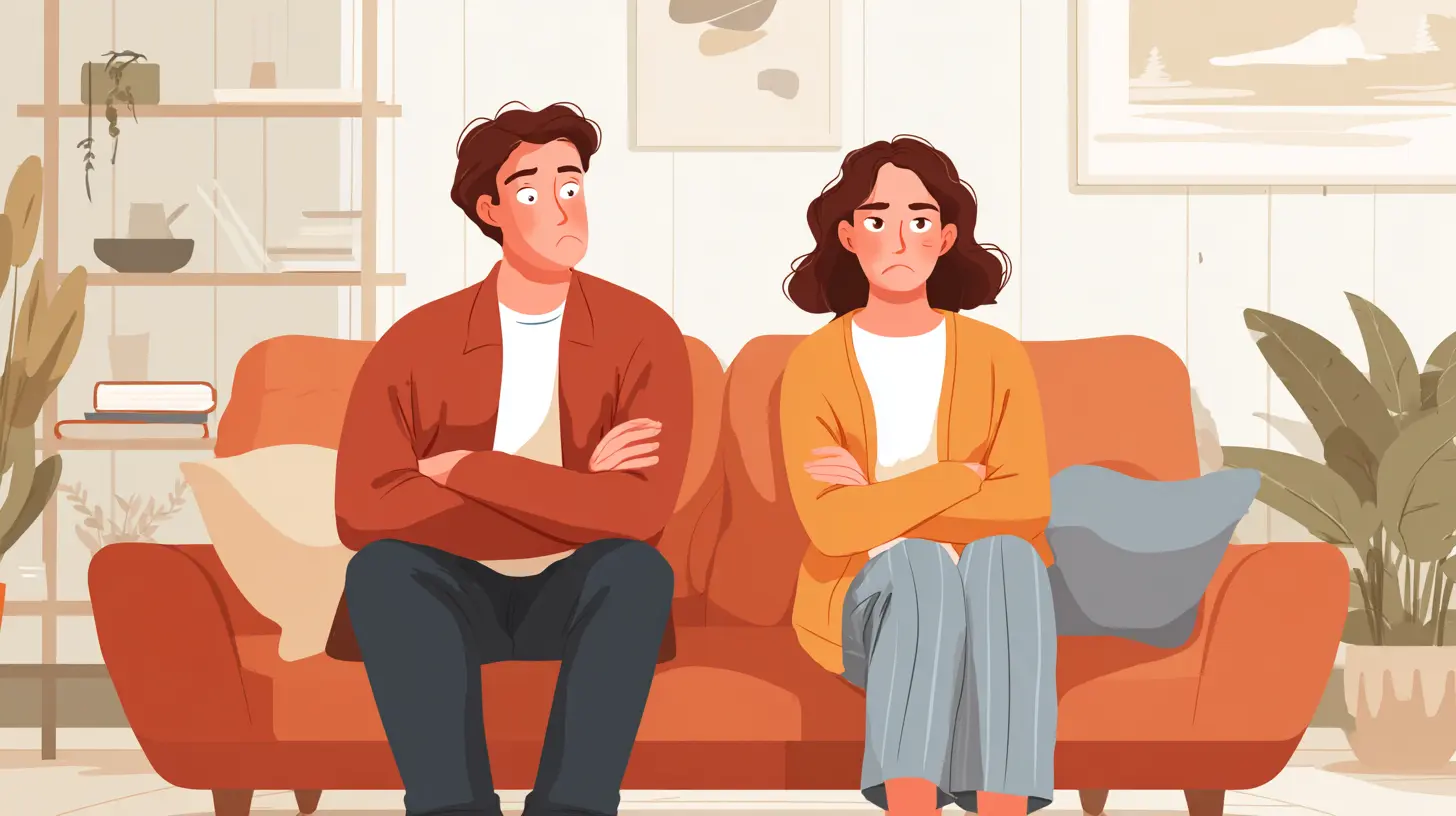
The most common pairing in modern dating is an avoidant person with an anxious person. This is not coincidence. Anxious attachment, which involves a heightened sensitivity to abandonment and a strong drive to secure reassurance, is almost magnetically drawn to avoidant distance. The avoidant person's withdrawal feels familiar to the anxious person, who grew up working for inconsistent affection. The anxious person's pursuit feels familiar to the avoidant person, who grew up managing intrusive care.The result is a cycle that both people find compelling and exhausting. The anxious partner senses distance and moves closer. The avoidant partner senses intrusion and moves further away. The anxious partner escalates, sometimes with protest behavior like repeated texts or emotional confrontations. The avoidant partner withdraws more completely, sometimes disappearing for days. Then, when the anxious partner begins to pull back or seems ready to leave, the avoidant partner re-engages with warmth. This re-engagement is not manipulation in most cases. It is genuine relief at the restoration of safe distance, followed by renewed discomfort when closeness builds again.
Understanding this cycle matters because it explains why so many people stay in relationships that make them miserable. The intermittent reinforcement, the unpredictable warmth after withdrawal, is one of the most powerful psychological hooks that exists. It is the same mechanism that makes gambling addictive. If the warmth were absent entirely, leaving would be easy. It is the periodic return of it that keeps people hooked.
Common Misconceptions That Keep People Stuck
Several myths about avoidant attachment cause real damage. The first is that avoidant people do not feel deeply. They do. Many describe intense internal experience that they simply do not express, and some describe feeling overwhelmed by emotion they cannot safely show. The absence of visible feeling is not the absence of feeling. Partners who assume coldness miss the fear underneath.The second myth is that enough love will fix it. This belief drives years of self-sacrifice in partners who think their patience will eventually break through. It will not, at least not reliably. Attachment strategies change through sustained internal work, often with professional support, and through relationships where the avoidant person feels safe enough to experiment with vulnerability. A partner cannot force that process by loving harder. Pressure, even loving pressure, usually deepens avoidance.
The third myth is that avoidant people are incapable of commitment. Many commit. They marry, have children, build lives. What they often struggle with is emotional presence within commitment. A partner can be fully committed on paper and still unavailable in the moments that require real intimacy. This distinction matters because it reframes the problem. The issue is not whether they will stay. It is whether they can be emotionally available while staying.
A fourth misconception conflates avoidance with independence. Genuine independence is the capacity to function alone without distress. Avoidance is the need to function alone to avoid distress. The difference shows up when autonomy is challenged. A truly independent person can choose closeness without losing themselves. An avoidant person often experiences closeness as a threat to selfhood, even when they intellectually want the relationship.
What Avoidant People Experience Internally
Partners of avoidant people often feel confused by behavior that seems contradictory. Understanding the internal experience helps. Many avoidantly attached people describe a wave of discomfort that arrives precisely when things are going well. A lovely evening, a sincere compliment, a partner saying "I missed you" can trigger a low-grade panic. The mind generates reasons: this is moving too fast, I need space, something is wrong. Those reasons feel legitimate in the moment, but they are often post-hoc explanations for a physiological alarm.Shame is frequently present. Avoidant people often know their withdrawal hurts partners, and they feel bad about it, but admitting that would require the vulnerability they are trying to avoid. So the shame gets converted into irritation, blame, or silence. From the outside it looks like indifference. From the inside it is often a painful loop of wanting connection, fearing it, pulling away, and then feeling guilty about the pulling away.
Many avoidant people also carry a belief that their needs are burdensome. If they grew up with caregivers who were overwhelmed, dismissive, or punitive, they learned to suppress needs entirely. In adult relationships, this shows up as difficulty asking for anything, discomfort receiving care, and resentment that builds when they give more than they feel able to ask for in return. The resentment then fuels further withdrawal, which the partner experiences as inexplicable coldness.
Practical Guidance for Partners
If you are dating someone with avoidant patterns, the first step is honest assessment. Are you seeing a pattern or a moment? Does the distance appear specifically around intimacy, or is it general? Have you raised concerns and seen any willingness to engage, or does every conversation about the relationship get deflected? These questions determine whether you are dealing with a manageable dynamic or a fundamental mismatch.Assuming you choose to continue, several practices tend to help. First, reduce pursuit during withdrawal. This is counterintuitive and difficult, especially for anxious partners, but chasing an avoidant person during their retreat reliably prolongs the retreat. Give space without punishment. A simple message like "I am here when you are ready to talk" communicates security without pressure.
Second, communicate needs in concrete, non-blaming terms. Avoid global statements like "you never open up." Instead, name a specific behavior and its impact: "When you go quiet for two days after a good date, I feel uncertain about where we stand. Can we agree on a way to check in?" Specific requests are easier to respond to than character judgments.
Third, watch for whether the person is working on themselves. Avoidant attachment is not a life sentence, but change requires the avoidant person to recognize the pattern and want to shift it. Signs of progress include naming their own withdrawal, apologizing without being prompted, and staying in difficult conversations for slightly longer than before. If none of these appear over months, you are not in a relationship with someone growing. You are in a relationship with someone managing you.
Fourth, set limits on behavior that crosses from avoidance into harm. Silent treatment, stonewalling during conflict, and chronic unreliability are not attachment styles. They are choices with consequences. You can hold compassion for someone's history while refusing to accept treatment that erodes your wellbeing.
Guidance for Avoidantly Attached Readers
If you recognize yourself in this article, the most useful thing you can do is stop treating your withdrawal as a personality trait. It is a strategy, and strategies can be revised. Start by noticing the moment the alarm goes off. For most avoidant people there is a physical signature: tightness in the chest, irritability, a sudden urge to check your phone or pick a fight. Learning to recognize that signal before acting on it creates a small gap where choice becomes possible.Practice staying for thirty seconds longer than comfortable. When a partner says something vulnerable, resist the reflex to deflect with humor or change the subject. When you feel the urge to cancel plans after a good date, go anyway and observe what happens. These small experiments build evidence that closeness does not destroy you. Over time, the alarm becomes less loud.
Be honest with partners about your pattern without using it as an excuse. Something like "I tend to pull back when things get close, and I am working on it" is honest and useful. It gives the other person information they need. What is not acceptable is using the label to justify repeated disappearances or to demand unlimited patience.
Consider professional support. Attachment patterns formed over decades rarely shift through willpower alone. Therapy, particularly approaches focused on attachment and emotional regulation, can help you identify the origin of the pattern and practice new responses in a safe context. This is not a sign of defect. It is the same logic as hiring a coach for a physical skill you cannot teach yourself.
The Trade-Offs of Staying or Leaving
There is no universally correct answer about whether to date someone with avoidant attachment. The decision involves real trade-offs. Staying offers the possibility of a relationship with someone who may grow into deeper availability, and many avoidant people do. It also carries the risk of years spent in a dynamic that leaves you chronically uncertain, and the risk that your own needs atrophy while you accommodate theirs.Leaving offers relief and the chance to build a relationship with someone whose default response to intimacy is approach rather than retreat. It also carries the grief of losing the good parts, which are often genuinely good, and the uncertainty of whether you will find something better. Neither path is cowardly or noble. The question is which costs you can live with and which you cannot.
One useful test is to imagine the current dynamic unchanged for five years. Not worse, not better, exactly as it is. If that image feels tolerable, you may have more room to work with than you think. If it feels like a slow erosion of yourself, that is important information. People often stay hoping for change they have no evidence will come. Hope is not a strategy.
Final Thoughts
Avoidant attachment is neither a villain nor a diagnosis to weaponize. It is a predictable human response to early relational pain, and it interacts with modern dating in ways that make both the avoidance and the pain harder to see. The most useful thing you can do, whether you are the avoidant person or the person dating one, is to trade vague frustration for clear observation. Watch the pattern. Name it honestly. Decide what you are willing to work with and what you are not. Clarity, not chemistry, is what ultimately determines whether a relationship can become something real.
all images in this post were generated using AI tools
Category:
Attachment StylesAuthor:

Christine Carter